

Artificial Turf Backing: The Key Factor Determining Service Life
Jun 11, 2026
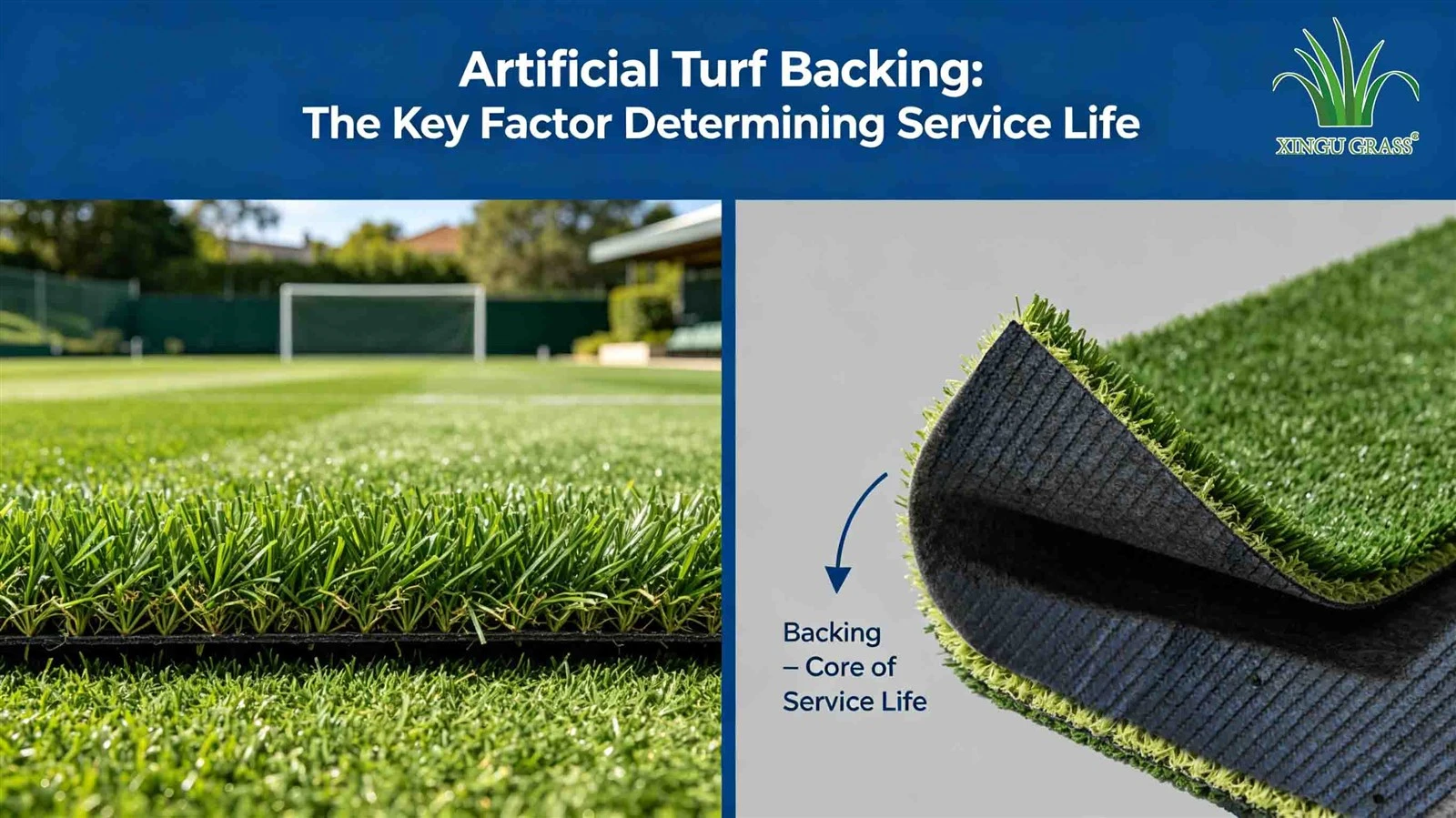
In the artificial turf industry, when selecting products, most buyers and industry professionals tend to focus on the pile height, density, material, and color, habitually using the quality of the grass blades as the primary criterion for judging the turf's quality. However, in actual installation and long-term outdoor use, the backing-not the blades-is the core component that determines the turf's service life, structural stability, and functional performance; it is also the "invisible" yet critical element most easily overlooked. While the grass blades primarily serve aesthetic and functional purposes regarding foot traffic, the backing acts as the structural skeleton of the entire turf roll. It is responsible for anchoring the blades and providing resistance against stretching, tearing, aging, and cracking or curling at the edges, while also facilitating drainage and preventing seepage. Whether for residential landscaping or professional sports fields, common issues such as fiber shedding, surface bubbling, edge curling, base rotting, and surface cracking are rarely caused by blade wear; instead, they usually stem from inferior backing materials or substandard lamination processes. This is particularly true for outdoor sites exposed to intense sunlight, heavy rain, and high-frequency foot traffic, where backing quality directly dictates the turf's lifespan. Inferior backing may degrade and fail within just three to four years, whereas high-quality backing ensures stable performance for over eight years, making it a key indicator for distinguishing product grades and controlling project quality.
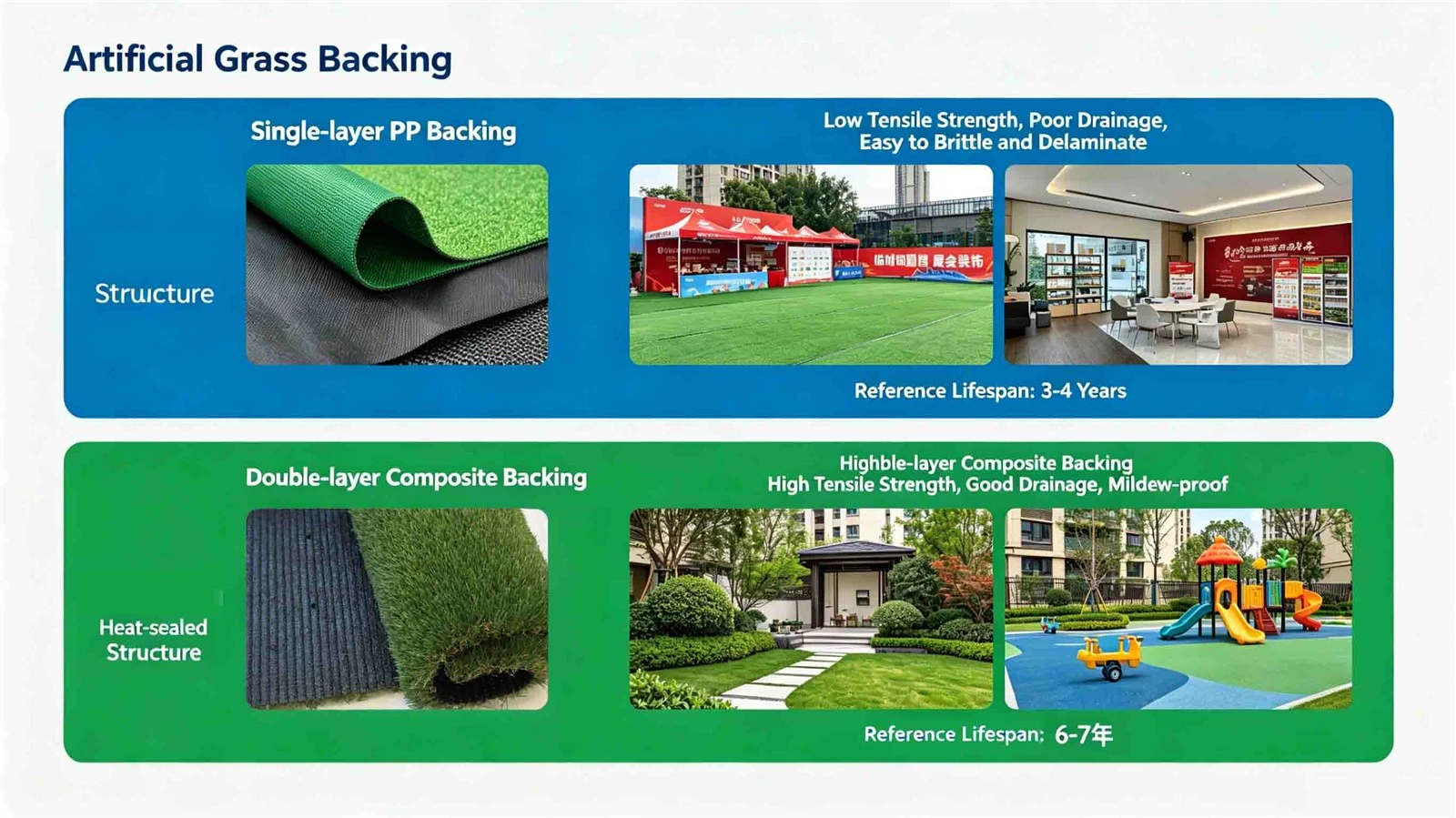
Currently, artificial turf backing in both domestic and export markets falls into three main categories: single-layer PP backing, double-layer composite backing, and triple-layer fiberglass-reinforced backing. These structures differ significantly in terms of raw materials, physical properties, durability, and application scenarios, serving as a primary factor in price differentiation. Single-layer PP woven backing represents a basic, entry-level option; featuring a simple structure and low production costs, it relies solely on a single layer of woven polypropylene fabric for structural support, resulting in relatively weak resistance to stretching, tearing, and aging. This type of backing fabric has poor breathability and drainage capabilities. When exposed to prolonged sunlight, rain, and standing water, it is prone to hardening, embrittlement, mold growth, and delamination. It cracks easily and suffers from fiber shedding under foot traffic, making it suitable only for low-frequency, short-term applications-such as exhibition decorations, temporary hoarding, or indoor displays-and entirely unsuitable for long-term outdoor projects. The double-layer composite backing represents the mainstream mid-range option in the current market; it is created by thermally bonding PP woven fabric with non-woven fabric. This combination offers both tensile strength and effective drainage, allowing for the rapid removal of groundwater to prevent the backing from rotting or molding due to prolonged immersion. It is perfectly suited for standard outdoor settings like residential landscaping, community green spaces, and kindergartens, offering a stable service life of six to seven years and excellent cost-performance, making it the preferred choice for standard landscaping orders both domestically and internationally.
A three-layer backing reinforced with fiberglass mesh is the standard for high-end artificial turf and the material of choice for professional sports venues and large-scale export orders. Building upon the double-layer composite structure, this backing adds a fiberglass mesh reinforcement layer to create a robust three-layer composite. This significantly enhances overall tear resistance and structural stability, effectively addressing common industry issues such as turf deformation, edge curling, and cracking caused by high-temperature exposure and thermal expansion or contraction. Furthermore, the use of a high-quality styrene-butadiene (SBR) latex coating ensures a strong bond between the grass fibers and the backing, fundamentally eliminating problems like large-scale fiber shedding. With comprehensively upgraded resistance to high temperatures, water immersion, and abrasion, it is ideal for high-intensity environments such as soccer fields, sports arenas, and commercial areas with heavy foot traffic, offering a service life of over eight years with proper maintenance. For bulk project procurement and export orders, the quality of the backing fabric directly impacts the project's reputation and after-sales costs. Prioritizing double-layer or multi-layer composite backings effectively reduces the likelihood of future damage, repairs, or replacements; this ensures long-term stability for the venue while significantly enhancing the product's overall value, serving as a cornerstone for high-quality artificial turf projects.