

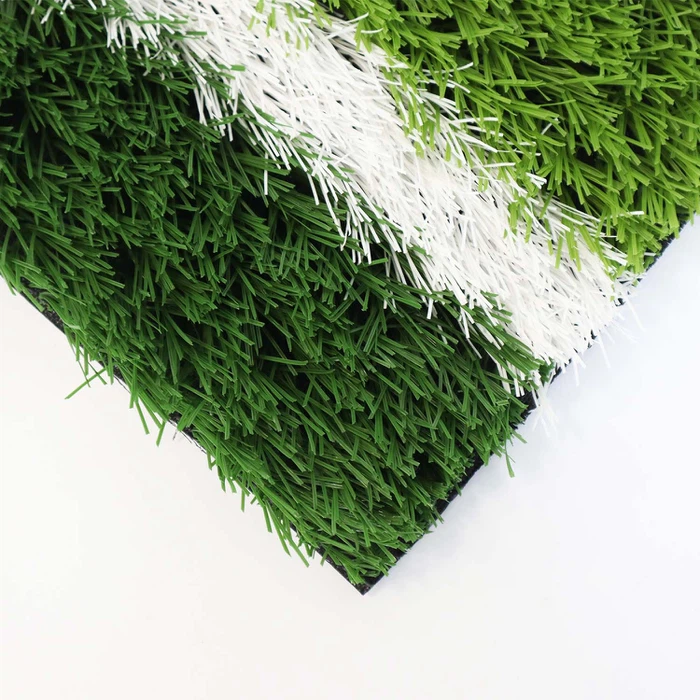
Artificial Football grass is a man-made material designed to look like grass. It is more predictable and its surface is often installed with rubber padding underneath. It is less likely to suffer quality issues after rain or develop uneven areas. Artificial football grass is easier to maintain and keep ready for the next big game. Also, balls bounce higher on turf, and the speed of games is faster.

Benefits of Artificial Football Grass
Safe for Players
Fake turf grass has an underlying shock absorber. The form underlays prevent players from getting serious injuries which might compromise their careers.
Secure pitches keep the players in a good physical condition, which in turn avoids the club making loses over player injuries.
Low Maintenance Cost Incurred
Compared to the maintenance task associated with a turf field vs grass field, the maintenance tasks of a turf field is less. The few tasks mean that you will incur few labor power and finances in maintaining the fake turf pitches.
Consistency
With turf grass, you will get consistency because of the quality of the playing ground. Turf grass has characteristics associated with improving the quality of the game played.
These features include controlled rolling of the balls and bounces. At the end of the day, you get the best out of the players and hence good results.
Durable
The durability of fake turf grass pitches makes turf grass pitches to be used for many functions. A pitch with fake turf grass can hold several matches before requiring any major repair service. It will take many matches, or rather a long duration of time before such a pitch starts displaying a sign of ware.
Customization
Customization is one of the many benefits of artificial turf. If you are considering covering your field with grass, I will encourage you to go for turf grass. Fake turf grass will allow you to choose the quality or the quantity depending on the size of your pitch and finance capability.
Weather Friendly
With fake turf grass, football games are played throughout the year regardless of the prevailing weather condition.
Unlike the real grass, you don’t have to worry about the availability of rain, or rather water, to water the grass. Because of this reason, the football calendar is not affected.
Eco-Friendly
If you compare turf fields vs grass fields, turf grass fields need minimal water, requires no pesticides and requires no fertilizers. This, in return, helps to conserve the environment from toxic substances and hence helping keep the environment clean.
Artificial Football Grass Products Description
-
![Football Turf Grass]() Add to Inquiry
Add to Inquiry -
![Artificial Grass for Football Ground]()
Artificial Grass for Football Ground
Add to Inquiry -
![Futsal Artificial Grass]() Add to Inquiry
Add to Inquiry -
![Fake Football Grass]() Add to Inquiry
Add to Inquiry -
![Football Fake Grass]() Add to Inquiry
Add to Inquiry -
![Artificial Soccer Grass]() Add to Inquiry
Add to Inquiry -
![Turf Grass Soccer]() Add to Inquiry
Add to Inquiry -
![Turf On Football Fields]() Add to Inquiry
Add to Inquiry -
![Chinese Fake Grass Turf For Soccer Field]()
Chinese Fake Grass Turf For Soccer Field
Add to Inquiry -
![High Grade Outdoor 50mm Artificial Turf For Football Field]()
High Grade Outdoor 50mm Artificial Turf For Football Field
Add to Inquiry -
![Cheap Artificial Grass For Football Field]()
Cheap Artificial Grass For Football Field
Add to Inquiry -
![S Shaped Artificial Football Grass Outdoor Carpet]()
S Shaped Artificial Football Grass Outdoor Carpet
Add to Inquiry




Tips for Maintenance of Artificial Football Grass
Regular Cleaning To Get Rid Of Stains
There is a common misconception about synthetic turf that it is 100 percent impervious to any type of stain. But that is not the case. While it certainly is true for elemental items like dirt, water, and sand, artificial turf still requires protection from several things that can leave a stain. These stains can be due to animal waste that occurs on the field, blood from an injury during a football game, or a stain from some type of debris.
The trick is to eliminate these stains as soon as they are formed. The longer the stains are left there, the more they will ingratiate into the fibres. When removing the stain, make sure to use as much hot water and soap as possible. Otherwise, try sticking to carrying around a bucket of hot soapy water to scrub the stain with a sponge. Don't forget to do a spot check after every major sporting event.
Picking Up Debris Frequently
The care of an artificial turf football field or turf requires consistency. Take pride in maintaining the quality of the artificial field’s synthetic fibres by removing anything that is likely to tarnish it over time. One of the peskiest aspects is to make sure the field is free of any debris. It is important to have a maintenance crew to undertake a thorough clean-up of the turf after all major events in the field. This helps to ensure that the quality of the turf stays intact.
Sanitation And Disinfection
Regular maintenance of the artificial turf football field installation is important to get rid of debris. A vacuum or leaf blower can be used to clean up dirt, seeds, or snow in the winter. This type of cleaning can be mitigated by restricting the use of gum, tobacco, sunflower seeds, and other sharp objects. An abundance of trash cans can also be placed around the facility to avoid any loitering on the turf.
Beyond surface cleaning, the artificial turf should also be sanitised on a weekly or monthly basis to protect the health of players as well as the coaches. This disinfection requires the use of special solvents, cleansers, and anti-microbial products. They help in getting rid of any invisible particles and bacterial growth.
Watering To Reduce The Temperature Of The Field On Hot Days
Heat can detriment the turf. Depending on where you live, while consistent heat can be hard to avoid, one important activity to undertake is to water the turf to reduce the temperature on hot days. Anytime there is an irregularly hot spring or summer day, ensure to water the turf down to cool it off a bit. That will help to fight off some of the heat trapped in the turf.
Undertake Regular Repairs
While a majority of synthetic turf field maintenance can be completed through regular practices and diligence, some of the issues do require professional help. It is therefore important to ensure that the synthetic sports turf is ready for optimal and safe play. The right turf maintenance involves patching, cleaning, and grooming the field. With professional help, it becomes easier to maintain the field. It helps treat the dragging carpet fibres or measure the field’s hardness.
Factors to Consider When Choosing Artificial Football Grass
The Surface of the Artificial Grass
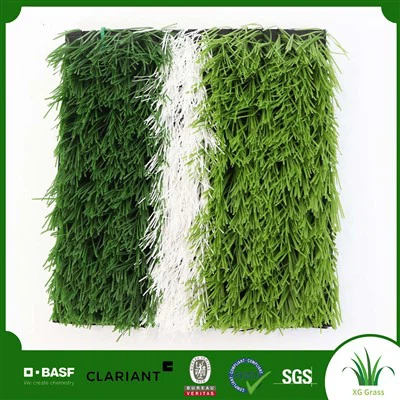
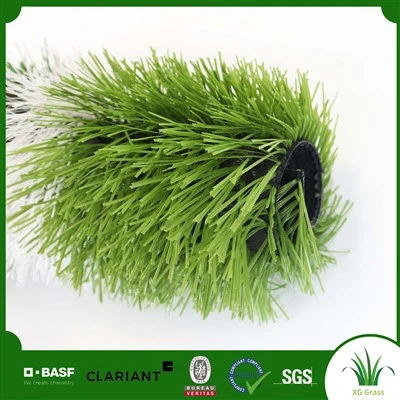
It's essential to inspect the turf's surface for a better playing field. A challenging sport like football requires a long carpet pile with resilient and tough polyethylene yarns. Depending on your needs, you can also choose high-density or low-density yarn. There should be enough fiber coverage to keep the surface green and ensure even footing.
The Pile Height Matters
You can determine the pile height by the sports played on it. It is best to choose a pile height between 40-50mm for football pitches. This replicates natural grass the best and reduces any infill splash. Furthermore, a denser surface lasts long and looks great.
The Infill
Every artificial football grass has an infill to ensure surface stability and add to the performance; checking the infill is crucial as it facilitates real-life appearance and helps absorb the shock of injuries.
The Base Requirement
Every sports pitch is constructed differently. Hence, knowing the base requirement is crucial for the ultimate performance. If your sports pitch has bumps and slopes, you should consider buying a football turf that evens out the surface. Furthermore, every region has different temperature requirements. A firm base can help clear the water and protect the grass from UV degradation.
Installation of Artificial Football Grass


Site Survey and Excavation
The first step in installing a soccer field turf is to survey the site and excavate the area to ensure a level surface. This includes removing any vegetation, rocks, or debris and leveling the ground.
Formation and Leveling
The next step is to form and level the ground. This involves shaping the soil to create a stable and level surface for the turf.
Crushed Stone Sub Base
A layer of crushed stone sub-base is installed. This layer serves as a foundation for the turf and provides drainage.
Curbs and Interlock Tiles
Curbs and interlock tiles are set in place. These elements help define the perimeter of the soccer field and provide stability for the turf.
AsphaltBase Course
The next step is to install an asphalt base course on top of the crushed stone sub-base. This layer provides additional support and stability for the turf.
Seam Joining
Roll out the football artificial grass rolls across the width of the pitch, ensuring one roll overlaps the other by approximately 50mm.
Trim one side of the roll with a sharp carpet knife for a straight seam, and cut the other side of the next roll using a steel straightedge to create a clean joint. Fold the rolls back and lay a 30cm wide seaming tape.
Mix a two-part adhesive using an electric drill and paddle for consistency.til the entire area is covered and the pitch appears green.
Field Markings and Decorative Markings
For permanent lines, shear the respective areas and use hot melt to glue the new colored turf material.
Shear the shape of the marking from the green field, removing loose fibers through vacuuming.
Apply adhesive to the seaming tape using a specialized glue spreading machine, covering the entire width without excess material spilling onto the turf.
Carefully unfold the new colored lines onto the seaming tape and weigh them down with a scaffold board until the adhesive cures.
Artificial Grass Infill Installation
Use a mechanically-operated spreader to place sand and rubber infill layers between the turf fibers, controlling the fill rate.
Between layers, mechanically brush and groom the infill to prevent fiber entrapment using a brush machine.
Continue brushing and filling until reaching the recommended infill level.
After completing the infill operation, check the infill depth with a depth gauge over a 10m grid of the entire pitch.
Construction Exit, Cleanup, and Testing
Remove the construction entrance, thoroughly clean the area, demobilize equipment, and conduct field testing.
Apply the adhesive to the seaming tape using a specialist glue spreading machine at the desired spread rate, ensuring complete coverage without excess material spilling onto the base.
Repeat the process until the entire area is covered and the pitch appears green.
FAQ
Q: What are the main types of artificial football turf?
Renowned for its durability and natural appearance, monofilament turf consists of single fibers that ensure resilience and longevity. It offers excellent ball control and player comfort, making it a preferred choice for high-traffic football fields.
Fibrillated Turf
Constructed from intertwined fibers, fibrillated turf excels in performance and requires minimal maintenance. Its uniform surface guarantees consistent ball roll and bounce, providing players with a reliable playing experience.
Hybrid Turf
Combining natural grass with artificial fibers, hybrid turf offers the best of both worlds. It delivers the aesthetics of real grass with the durability and consistency of artificial turf, making it suitable for elite-level competitions.
Q: What materials do you use to make artificial football grass?
Q: Can your artificial football grass be customized?
Q: Do you offer artificial football grass in different colors?
Q: What is futsal artificial grass?
Q: How does futsal artificial grass differ from regular artificial turf?
Q: Is futsal artificial grass safe for players?
Q: What height of artificial football grass should I choose?
We're well-known as one of the leading artificial football grass manufacturers and suppliers in China. If you're going to wholesale high quality artificial football grass made in China, welcome to get more information from our factory.
Artificial Soccer Grass, Artificial Football Grass, Fake Football Grass