


Analysis of PFAS and PAHs Compliance Control in the Artificial Turf Industry
Sep 03, 2026
In 2026, environmental sustainability and compliant production have become the core themes driving high-quality development of the global artificial turf industry. Among various industrial upgrading factors, the increasingly stringent global control standards for PFAS and PAHs toxic substances stand out as a pivotal force reshaping the industrial landscape, standardizing market competition, and determining the overseas competitiveness of manufacturing enterprises. With the continuous improvement of global ecological and environmental protection awareness, safety inspection regulations for artificial turf products have become increasingly refined worldwide. Toxic substance compliance is no longer an optional advantage for enterprises but a fundamental bottom line for market survival and industrial participation. This irreversible trend has comprehensively promoted the transformation of the artificial turf industry from the previous extensive production mode to refined, green, and environmentally friendly operation.
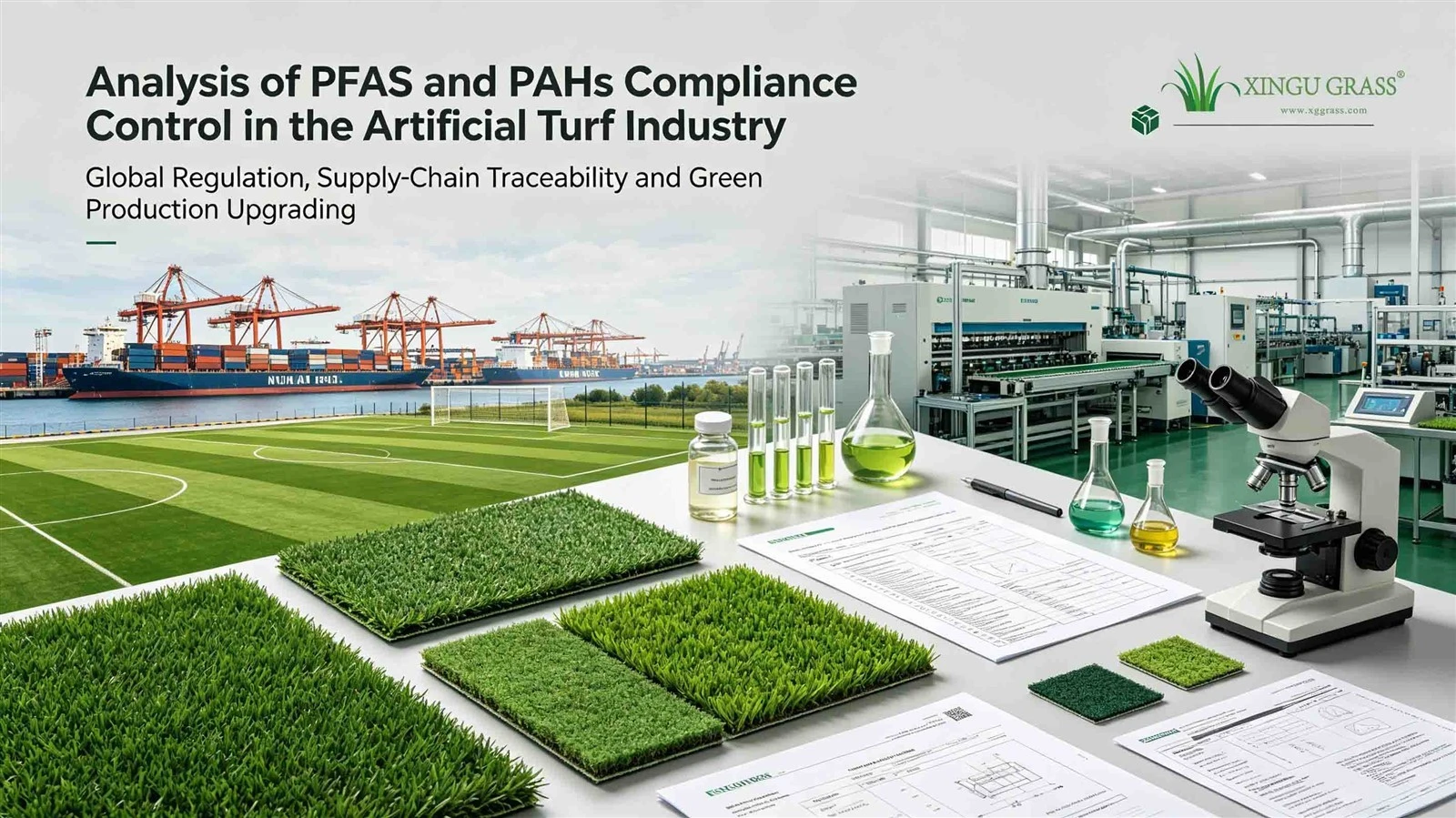
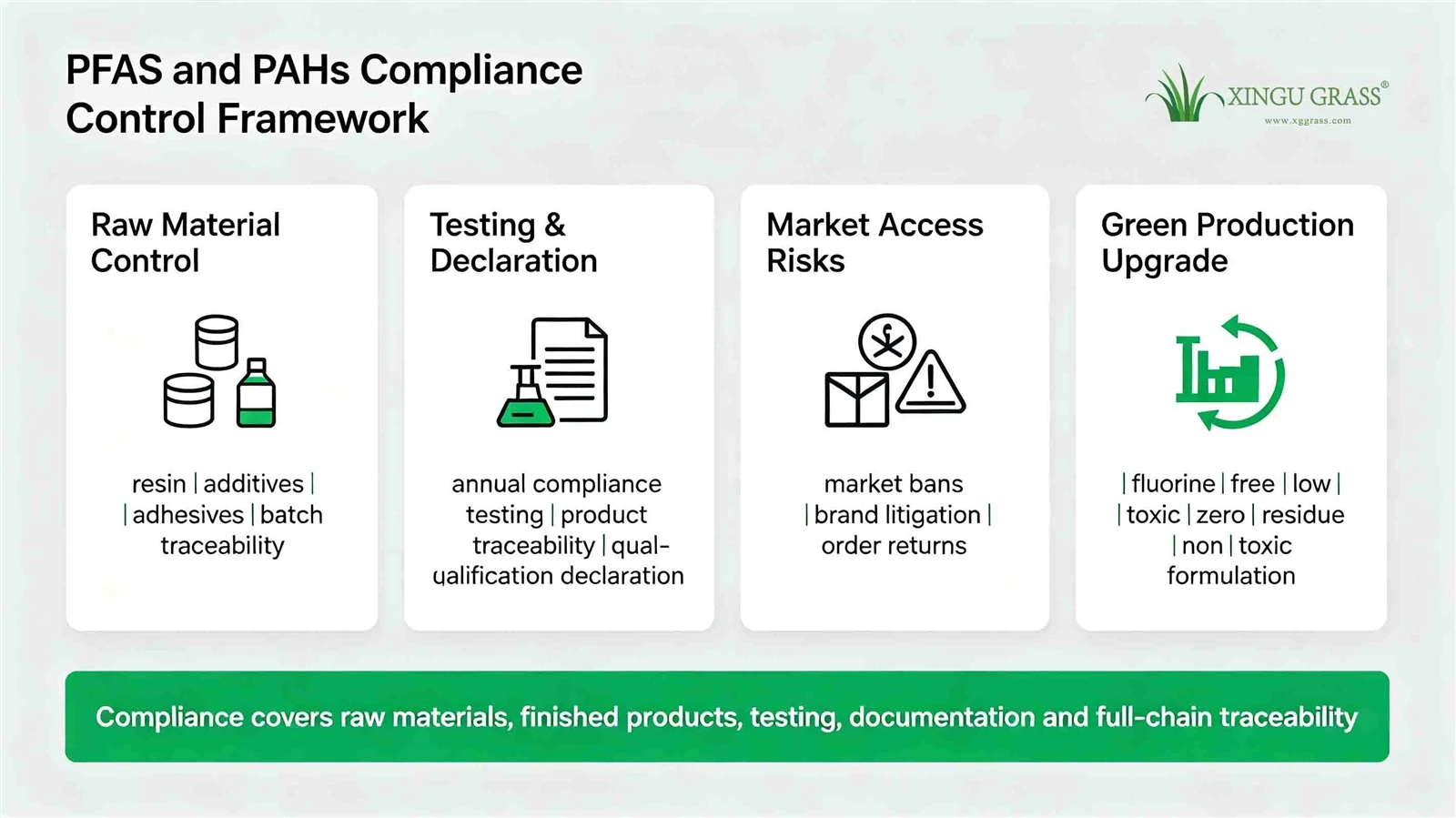
At present, mainstream European and American countries have established a full-coverage and high-stringency supervision system to regulate the entire process of artificial turf production, circulation, and application. The latest industrial regulations issued by the U.S. Environmental Protection Agency (EPA) bring all PFAS substances contained in raw materials such as resin, additives, and adhesives, as well as finished turf products, into the mandatory supervision list. All manufacturing enterprises are required to complete annual compliance testing, product traceability publicity, and qualification declaration, realizing comprehensive and dead-angle-free supervision of the entire industrial chain. Similarly, the European Union has continuously tightened the limit standards for PAHs, significantly raising the threshold for toxic residue control and strictly prohibiting the application of highly toxic and harmful chemical additives in turf production and processing.
The rigorous policy supervision has triggered profound industrial reshuffling. Traditional outdated production formulas with high fluorine and high toxic residues have been completely phased out, and a large number of small and medium-sized enterprises with substandard compliance capabilities have been eliminated from the market. Non-compliant products frequently face overseas market bans, brand litigation risks, and order returns, which greatly intensifies market elimination pressure. This situation forces mainstream manufacturers to abandon extensive production methods, increase investment in environmental protection research and development, and comprehensively upgrade green production processes that are fluorine-free, low-toxic, and zero-residue. Currently, non-toxic environmental compliance has become a rigid access requirement for artificial turf products in overseas export trade, professional sports venue construction projects, and government procurement bidding, serving as a core guarantee for enterprises to explore international markets and stabilize market shares.
In conclusion, the upgrading of PFAS and PAHs supervision is not a short-term policy adjustment but an inevitable trend of standardized and sustainable development for the artificial turf industry under the global environmental protection context. In the short term, strict compliance standards raise enterprises' production, research and development, and operational costs, bringing certain operational pressure and accelerating industrial survival of the fittest. In the long run, however, a sound and rigorous supervision system effectively purifies the market environment, eliminates backward production capacity, and drives technological innovation and overall quality upgrading of the industry. In the future, adhering to green and non-toxic production and improving the full-chain compliance management system will remain the core competitive advantage of artificial turf enterprises. It will also lay a solid foundation for the industry to break through international trade barriers, steadily promote global layout, and achieve long-term and high-quality sustainable development.


