

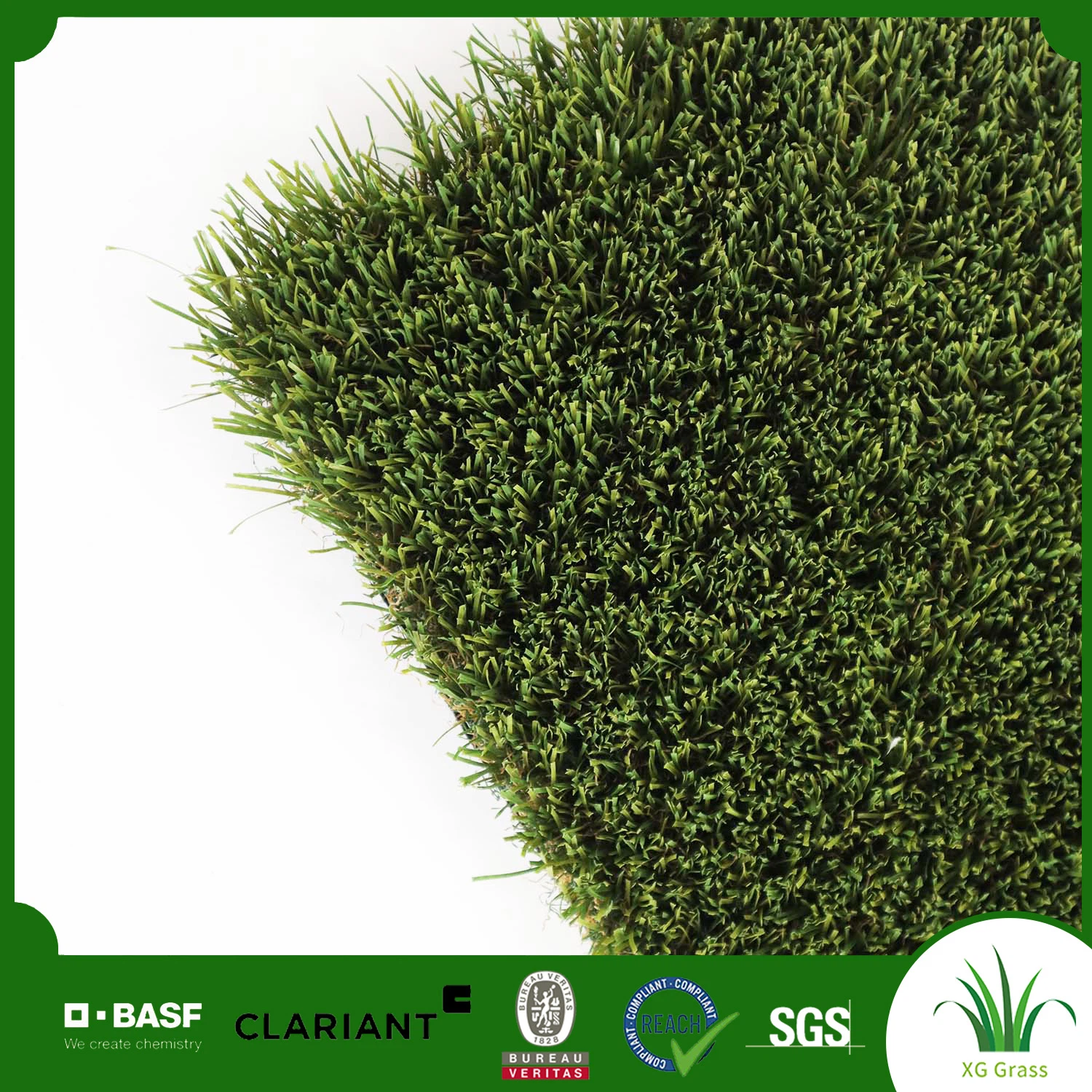
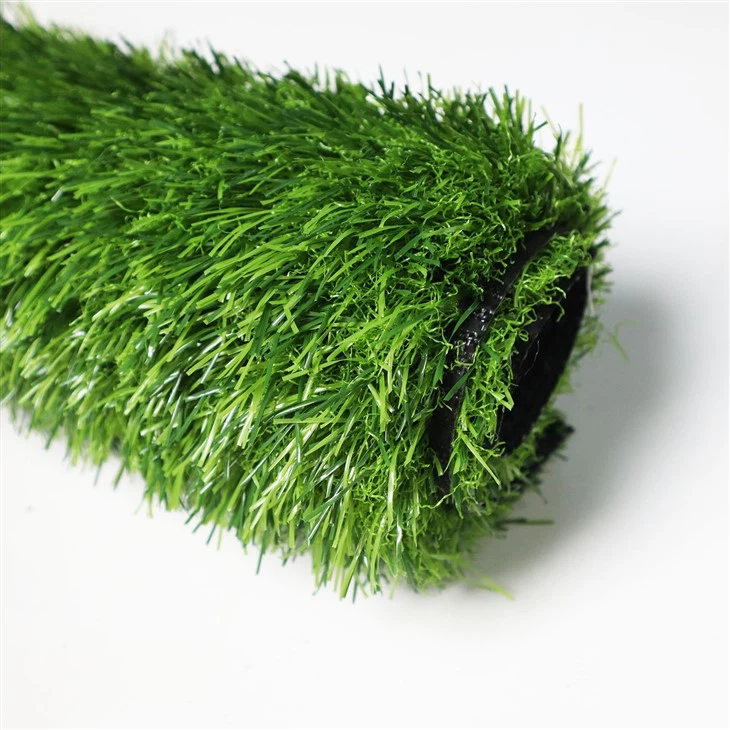
Artificial landscape grass is a synthetic grass alternative made from durable fibers like nylon, polyethylene, or polypropylene. Most artificial grass is built to withstand the outdoor elements. It's heat-resistant, frost-resistant, and UV stable.
Features of Artificial Landscape Grass
Durability and Longevity
Durability depends largely on the quality of materials used to construct the synthetic blades and backing. Premier brands use advanced polymers and technological innovations to bolster strength and stability. This enables the blades to endure years of sun, rain, and activity without substantial deterioration.
UV Resistance
Continuous sun exposure can cause discoloration and fading over time. UV-resistant artificial landscape grass undergoes treatment to prevent ultraviolet rays from breaking down the color pigments and polymers. Special UV-inhibitors are incorporated to sustain the rich green tones much longer than non-UV resistant varieties, which lose charm within a year.
Effective Drainage System
Without proper drainage, artificial grass collects rainwater causing foul odors and bacteria. Superior quality options have drainage capacities via perforations in the backing layer. This permits water to freely flow through instead of pooling on top. Some advanced systems also integrate a slight slope to facilitate runoff.
Realistic Appearance
The intent behind artificial lawns is simulating the aesthetics of lively, lush grass. High-standard synthetic turf utilizes state-of-the-art polyethylene or polypropylene to match natural grass blade width, color variations, thatch layer, and texture. This attention to detail creates a convincingly life-like appearance.
Smooth Non-Abrasive Texture
While touted for durability, cheaper artificial grass variants have stiff, abrasive blades with sharp edges. The blades should feel supple and smooth, not scratchy. Newer technologies use refined needles and tufting to produce softly rounded blades pleasant to touch.
Resilience to Foot Traffic
Respectable artificial grass needs to withstand regular activity without flattening down. Better grades integrate advanced infill between blades for support and bounce-back recovery after use. Precise distribution and infill depth also contribute to optimal results.
Low Maintenance Requirements
Aside from installation, high-end artificial lawns require minimal upkeep unlike natural grass. Mowing, fertilizing, dethatching, and weeding are non-existent. Just occasionally rinse debris, gently rake matted areas, and redistributed displaced infill. The hassle-free nature offers practical convenience.
Artificial Landscape Grass Products Description
-
![Artificial Turf Landscape]() Add to Inquiry
Add to Inquiry -
![Best Artificial Grass For Landscaping]()
Best Artificial Grass For Landscaping
Add to Inquiry -
![Artificial Grass And Landscaping]()
Artificial Grass And Landscaping
Add to Inquiry -
![Grass Mat For Balcony]() Add to Inquiry
Add to Inquiry -
![Fake Grass For Balcony]() Add to Inquiry
Add to Inquiry -
![Landscape Gardeners Artificial Grass]()
Landscape Gardeners Artificial Grass
Add to Inquiry -
![Nontoxic Anti-Fire Artificial Grass Friendly To Pets And Children]()
-
![Premium 35mm Natural Look Artificial Grass For Outdoor Place]()
Premium 35mm Natural Look Artificial Grass For Outdoor Place
Add to Inquiry -
![Top Artificial Grass]() Add to Inquiry
Add to Inquiry -
![Cheap Fake Grass Carpet]() Add to Inquiry
Add to Inquiry -
![Evergreen Artificial Grass And Landscapes]()
Evergreen Artificial Grass And Landscapes
Add to Inquiry -
![Artificial Grass For Landscape]()
Artificial Grass For Landscape
Add to Inquiry



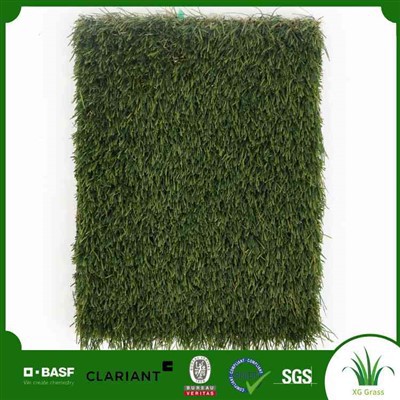

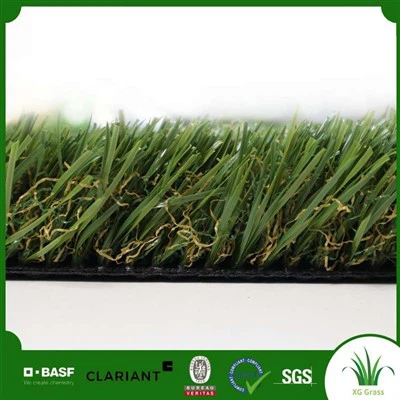

Nylon
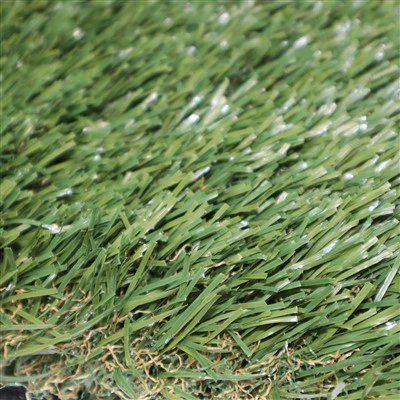
Nylon is used in artificial grass applications, and has some important properties that can make it a good choice for artificial turf, depending on your use.
Advantages
Nylon is extremely resilient, which means the individual turf fibers will “spring back” and maintain an upright position. Because of this, nylon is the lowest-maintenance choice and will require the least amount of upkeep among these three choices.
Nylon is resistant to UV radiation, which means it keeps its color extremely well.
Nylon is also the most heat-resistant of the materials available, with a melting point of around 460 degrees Fahrenheit.
Nylon is highly abrasion-resistant, meaning it will not be worn away by friction or rubbing. Because of this, it's very long-lasting.
Disadvantages
The abrasion-resistant qualities of nylon have a downside. When friction happens, the less abrasion-resistant material will take the brunt of the damage – this can be the clothing or the skin of an athlete. Nylon is notorious for causing “turf burn”.
Nylon artificial landscape grass is easily stained by acidic dyes, such as those found in coffee or wine.
Nylon artificial landscape grass is the most costly artificial grass on the market.
Polyethelene
Polyethelene is both the most recently introduced artificial grass product and the most commonly used material for grass fibers currently on the market.
Advantages
It's the most realistic-looking grass available and behaves the most like real grass.
Polyethylene is extremely resistant to water absorption, meaning it does not keep pet odors. If you are concerned about odors, this is the material you should choose.
It's softer than nylon but more durable than polypropylene, making it a good middle ground suitable for a variety of applications. Turf burn is minimal and though it may require occasional brushing, it’s very low-maintenance and should spring back into place for most standard pile heights.
Polyethylene has a good combination of toughness and ductile strength – while it is not hard, it bends well.
Disadvantages
It has a relatively low melting point, 248 – 266 degrees Fahrenheit. The addition of other polymers during the manufacturing process (sometimes the addition of polypropylene) can raise this.
In its raw form, Polyethylene is susceptible to UV degradation – because of this it's almost always combined with UV stabilizers.
Polypropylene
This material is often used for putting greens but is also used as a thatch layer for landscape grass.
Advantages
When used in the blades of grass, polypropylene is the thinnest and the softest of the three materials.
It has a relatively high melting point, from 320-331 degrees Fahrenheit.
Polypropylene is very resistant to absorbing moisture, making it good for pets and for backing applications.
It's inexpensive – among the materials, it is easily the cheapest to manufacture.
Disadvantages
Because it is thin and soft, polypropylene doesn't have the resilience of nylon, and it's susceptible to flattening, especially at taller pile heights.
Polypropylene is not as abrasion-resistant as polyethylene or nylon, which means grass fibers will not be as resistant to wear and tear and will not last as long.
It is not as UV-resistant as nylon, and can begin to break down at temperatures above 214 degrees Fahrenheit. Because of this, it is commonly combined with other UV-resistant polymers during the manufacturing process.
Application of Artificial Landscape Grass
Artificial Grass For Dogs And Pets
Many dog owners are turning to artificial grass as the solution to their problems. With a free draining artificial grass installation, it creates a much healthier environment for dogs to play in and less maintenance for the owners.
Playground Areas
Just like schoolyards, public playgrounds get a lot of foot traffic, and often the natural grass just can’t cope. This combined with the hot sun and drenching rain means that playground areas can easily turn to big dust bowls or muddy nightmares.
Artificial grass will help reduce injuries in the playground and the need for incident reports. That’s because we use ‘soft fall’ technology on all our grasses. So when a child falls, they land on the safest and softest possible surface—even better than real grass.
Backyard Sports Fields
Homeowners choose artificial grass for backyard sports fields, such as soccer and cricket, for several reasons. For one, synthetic grass provides a level playing field with lower risk of tripping when compared to natural grass. It is easier to care for, does not get muddy after rain and is ready for a pick-up game at a moment’s notice. Artificial landscape grass is also made to drain naturally, so the surface won’t be slippery.
Backyard Putting Greens
Both residential and commercial putting greens are often seen with artificial grass, which provides an easy-care, level playing surface that is always ready for some practice swings. There is no need to wait days for the soil to dry after it rains and no worrying about tracking mud and grass into the house after practice.
Using artificial landscape grass for a backyard putting green also gives you more flexibility for where you can fit your practice area. Ugly concrete areas and balconies can be transformed to a usable space with a green and seating.
Outdoor Entertaining Areas
As with other uses for artificial turf, homeowners are choosing it for outdoor entertaining or BBQ areas for its durability and visual appeal. Without ever having to push a mower or maintain an irrigation system, you can have an inviting, green lawn that will provide both a foundation and a focal point for outdoor entertaining.
An artificial grass lawn can withstand lots of traffic and provides the perfect place for everything from an afternoon tea party to a backyard movie night.
Pool Areas
Everyone wants their pool area to make a splash. Landscaping around your pool with artificial turf allows you to have the look and feel of a natural grass lawn without worrying about dirt getting in the pool, pool chemicals killing your lawn or wet feet picking up blades of grass to track into your house.
Normal grass will lose traction and turn to slippery mud over time, and while concrete and sandstone is popular, it doesn’t create the same atmosphere of pool-side paradise that a huge swathe of green grass can. Even just a thin strip around the perimeter can look fantastic and offer much better grip under foot.
Balcony Surfaces
If you prefer an inner-city balcony instead of a big open backyard in the suburbs, there’s no reason why you can’t still enjoy a bit of greenery in your scenery. Artificial turf makes for a fantastic balcony surface. It can be easily cut to fit the dimensions of any space, it’s soft under foot, it’s low maintenance and simple to clean, and with a few carefully placed pot plants or flower boxes, you can bring a refreshing burst of nature back into the concrete jungle.
Process of Making Artificial Landscape Grass


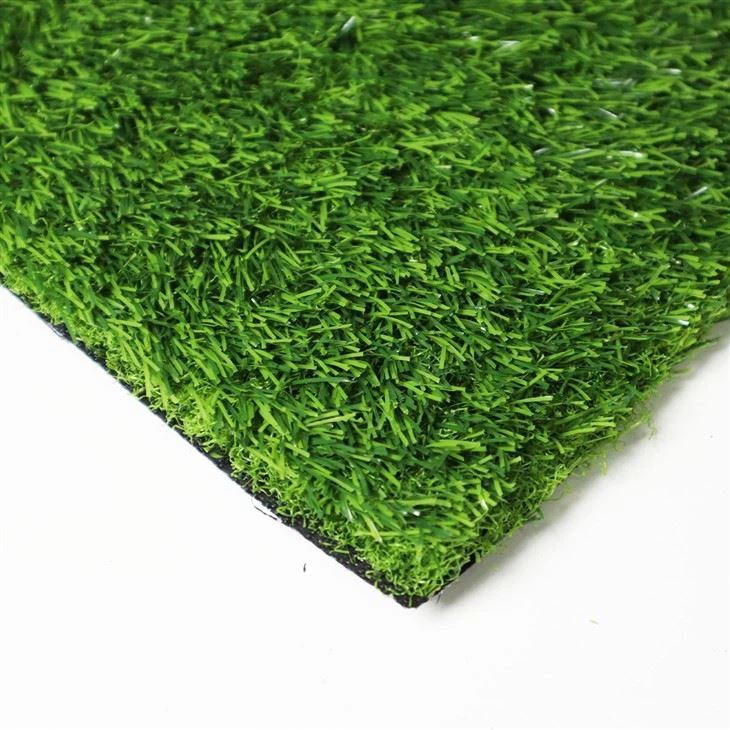
First, all the ingredients that go into the making of the grass blades are fed into a hopper.
To this, the dyes which impart the “green grass” coloring and chemicals that make the grass UV resistant and protect it from the sun’s rays are added.
The batch is then thoroughly mixed and then fed into a steel mixer, where the mixture is blended and turned into a thick liquid that has a taffy-like consistency.
This thick liquid is then passed through an extruder and long, thin strands are produced.
The thin strands are then placed on a carding machine and spun producing loose rope. The ropes are then pulled and straightened. Then they are woven into yarn, which is then coiled on large spools.
Next, the yarn is heated to form the twisted shape.
The yarn is then taken to the tufting machine and placed on a bar with a reel located behind the tufting machine.
The yarn is fed via a tube to the tufting needle, which pierces the turf backing and pushes the yarn into the backing in a loop. A flat hook or a looper holds and releases the nylon loop while the needle moves back and the backing is shifted forward. The process is repeated until the entire backing is covered with the rows of stitches. The artificial grass carpet is now ready.
The artificial grass carpet is then rolled and a coating of latex is spread on the underside of the carpet. A secondary backing made of a stronger material is also coated with the latex and both the grass carpet and the backing are then rolled into a roller that presses and seals the two together.
The latex is then cured by placing the artificial lawn under heat lamps.
The grass carpet is then fed through a machine that cuts off any extra lengths of grass.
The carpet is finally rolled into lengths and sent for packaging, from where it is shipped to the seller.
How to Install Artificial Landscape Grass
Prepare the Base
When installing artificial grass on dirt or soil, you’ll need a subbase. Using a shovel, clear the surface where your artificial grass will be placed. This can include removing any existing grass, roots, mulch, pine needles or other obstacles that could impact the artificial grass over time. Then, dig out the existing soil up to 2-1/2 inches deep.
Lay Down the Weed Barrier
To help stop weeds from growing and penetrating the underside of the artificial grass, install a weed barrier. A weed barrier is strong enough to keep weeds down and porous enough to offer good drainage.
Roll out the weed barrier across the aggregate base and cut as needed. Make sure the correct surface is facing up. Overlap each length of fabric and along the perimeter. Secure it with 6-inch galvanized nails or landscape anchors every few feet.
Add the Aggregate
Once the base is cleared and properly prepared and the weed barrier is down, add a 2-to-4-inch layer of aggregate, such as gravel or crushed stone, to achieve your desired shape and contour.
Rake and Smooth the Aggregate
Work the aggregate with a rake, using the fork side to spread it and the flat side to smooth it. For a smoother surface, use a screed to level the aggregate.
Tamp the Aggregate
Use a tamper to compact the aggregate. For larger areas, a plate compactor makes quick work of tamping.
Trim the Grass
Now that the base is ready, position the artificial grass in place over the aggregate, being careful not to drag the grass over the freshly prepared surface. Trim the grass with a sharp utility knife to fit your desired shape. Be sure to cut the grass slightly larger than the area where it’s being installed to ensure complete coverage. You can always trim any excess that you don’t need.
Seam the Edges
When using more than one roll of artificial grass, you’ll need to seam them together. Align two pieces of artificial grass at the seams, edge to edge. Seaming cloth, also known as artificial grass tape, is used to join two pieces of artificial grass. Pull back the grass and lay seaming cloth along the length of the seam.
Secure the Seaming Cloth
Using a hammer, secure the seaming cloth with landscape anchors or 6-inch galvanized nails.
Apply Adhesive
Apply outdoor carpet adhesive to the seaming cloth with a trowel. To avoid uneven spots, make sure to spread the adhesive in a consistent thickness along the length of the seaming cloth.
Connect the Seams Together
Allow the adhesive to set for 10 minutes. Then slowly begin to lay the two seams of the artificial grass sections back together. Be sure to check the fit as you go to avoid any gaps in the seam.
Secure the Artificial Grass
Now that the grass is laid, make sure it’s taut and flat. Secure it with 6-inch galvanized nails or landscape anchors around the perimeter and wherever necessary to keep the lawn flat. Use a utility knife to cut off any overlapping grass on the edges.
Spread the Infill
To help weigh down the artificial grass, spread infill, such as silica sand, over the entire surface. Infill goes deep down into the grass and helps keep it from looking matted down from foot traffic.
Brush the Infill
Use a stiff-bristle broom or a landscape rake to work the sand into the grass fibers. This helps the fibers stand up and gives your lawn a seamless appearance. Be sure to work in the same direction across the grass so that it maintains a uniform appearance.
FAQ
Q: Is artificial grass better than natural grass?
Q: What is the benefit of artificial landscape grass?
It prevents you from having to worry about muddy puddles.
It's cost effective, saving you money on the materials and labor usually spent on lawns.
It'll help reduce your water consumption.
It reduces the air pollution from lawn mowers.
It's safe for children and pets.
Q: What should I do if my turf smells after rain?
Q: How often should I clean my artificial grass of dog urine?
Q: Is artificial landscape grass waterproof?
Q: Does artificial landscape grass let water through?
The most common type of synthetic turf backing is the “Hole-Punched” backing, in which drainage holes are spaced equally across the turf to ensure rapid drainage.
Q: If there are snow on the artificial landscape grass, can I melt the snow with salt?
Q: How long can the artificial landscape grass last?
Q: Can I vacuum artificial landscape grass?
Q: Can I lay artificial landscape grass on top of existing lawn?
We're well-known as one of the leading artificial landscape grass manufacturers and suppliers in China. If you're going to wholesale high quality artificial landscape grass made in China, welcome to get more information from our factory.
Artificial Turf for Front Yard, Landscape Gardeners Artificial Grass, Artificial Landscape Grass