

What Is The Best Artificial Grass For Outdoor Landscaping?
Oct 08, 2026
Outdoor landscaping artificial grass differs greatly from indoor decorative turf, as it needs to withstand long-term exposure to sunlight, rain, wind, and temperature changes. The best outdoor artificial grass should balance durability, weather resistance, aesthetics, and cost performance, adapting to parks, residential communities, commercial plazas, scenic spots, and other outdoor scenarios. Choosing the right turf effectively reduces later maintenance and replacement costs.
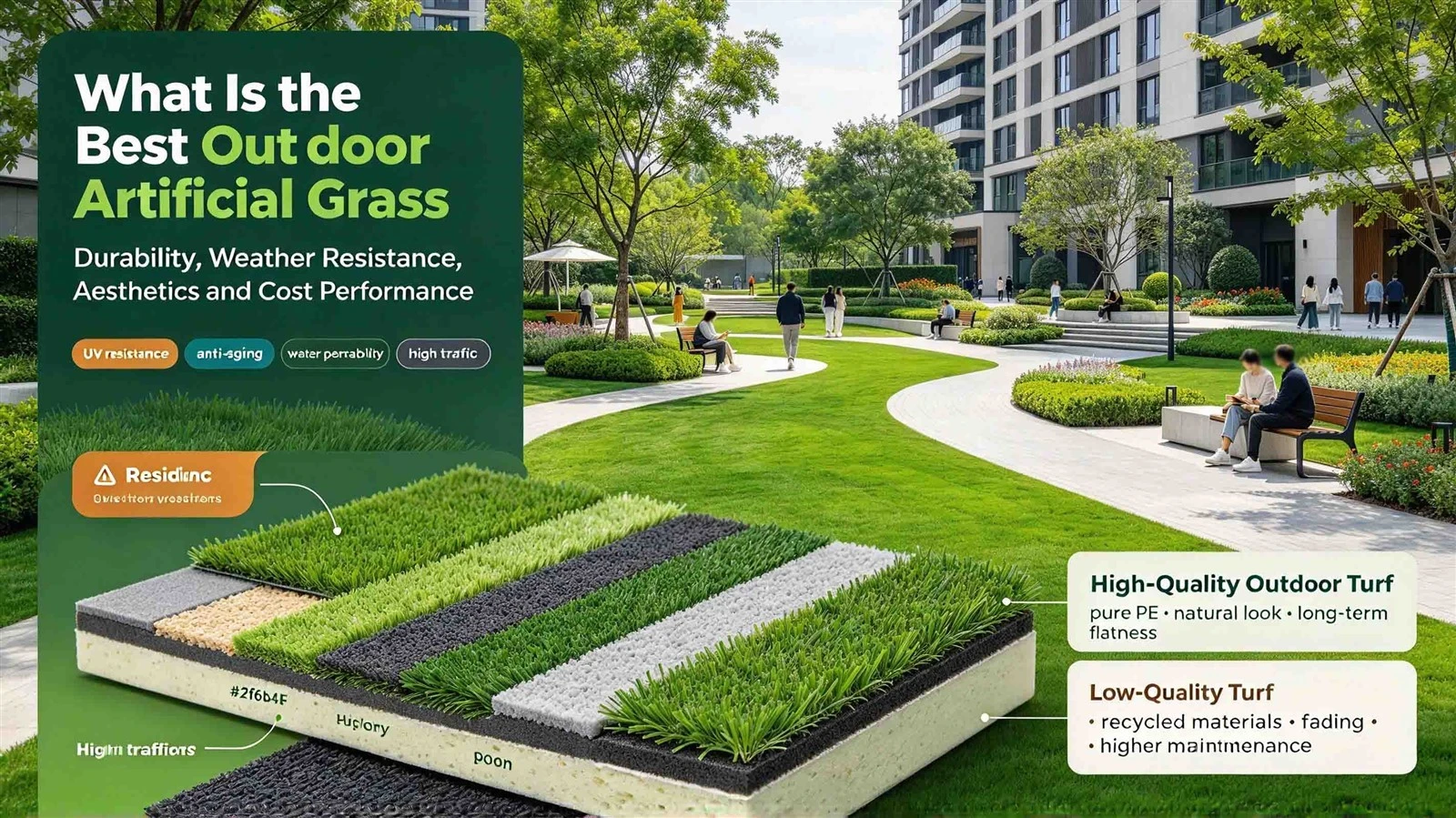
Raw material quality is the core determinant of outdoor turf performance. High-quality outdoor artificial grass adopts imported pure PE raw materials, with excellent UV resistance and anti-aging properties. It can avoid fading, brittle fracture, and yarn falling after years of outdoor exposure. Inferior turf uses mixed recycled materials, which will fade significantly within one year and lose landscape effect, increasing project maintenance costs.
Structural design also affects outdoor applicability. Professional outdoor landscaping turf adopts dense tufting technology and high-strength latex back glue, with good tensile resistance and water permeability. The uniform drainage hole design avoids water accumulation in rainy days, preventing mildew and base decay. For high-traffic outdoor areas, high-density and high-elasticity turf is recommended to ensure wear resistance and long-term flatness.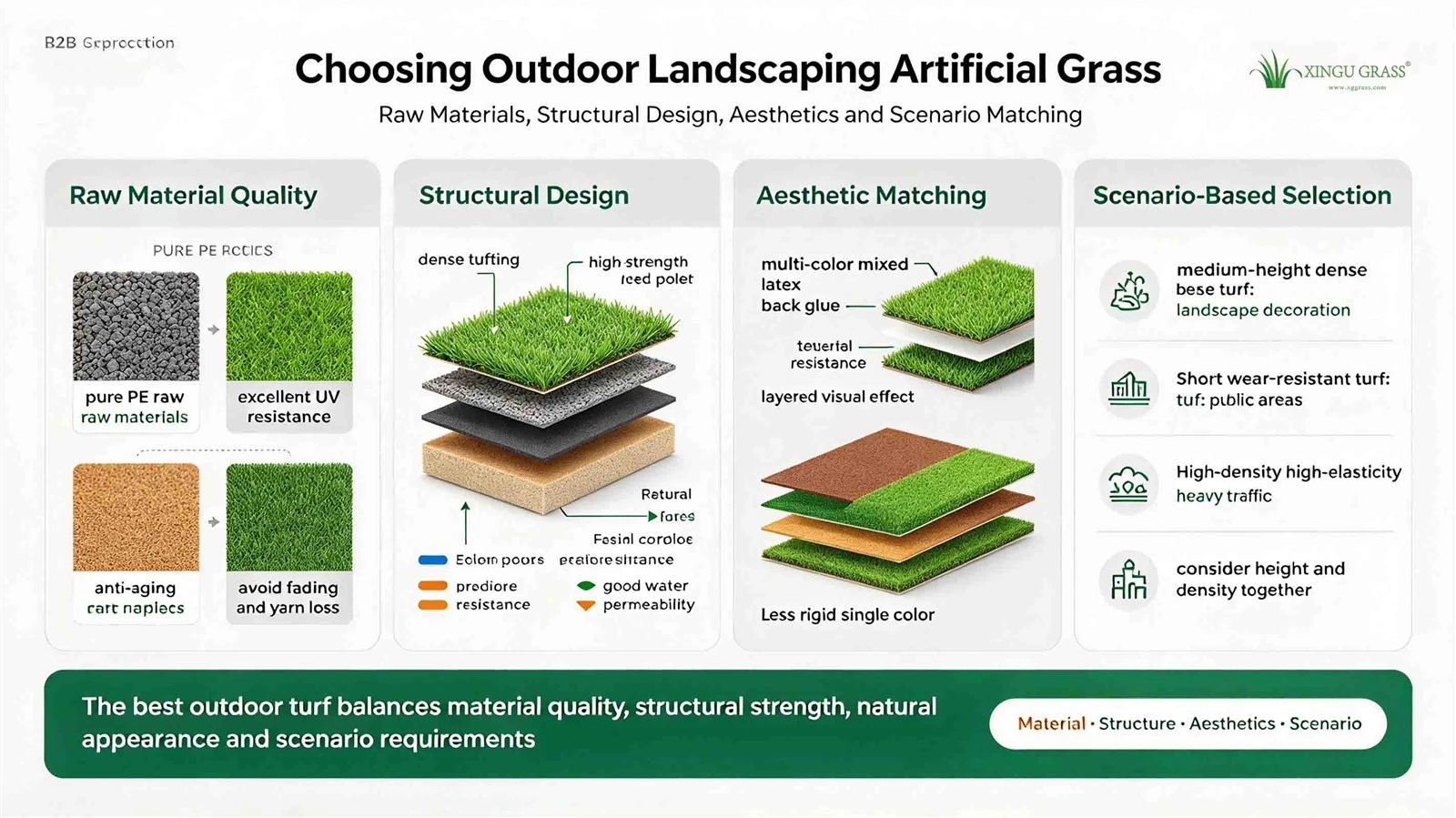
In terms of aesthetic matching, outdoor landscaping turf prioritizes natural color gradient and simulation. Multi-color mixed blade design can simulate the layering of natural lawns, avoiding the rigid single-color effect of low-quality turf. Buyers can select different turf heights and densities according to scenario positioning: medium-height dense turf is suitable for landscape decoration, while short and wear-resistant turf is more suitable for public activity areas.


