

Artificial Turf Around Pools: Safety, Drainage And Chlorine Resistance
Oct 10, 2026
Introduction
Pool areas are wet, busy and hard to landscape - concrete gets dangerously slick and natural grass turns to mud. This article explains what to check when choosing artificial turf for poolside surfaces, so the area stays safe and low-maintenance.
1. Safety on Wet Surfaces
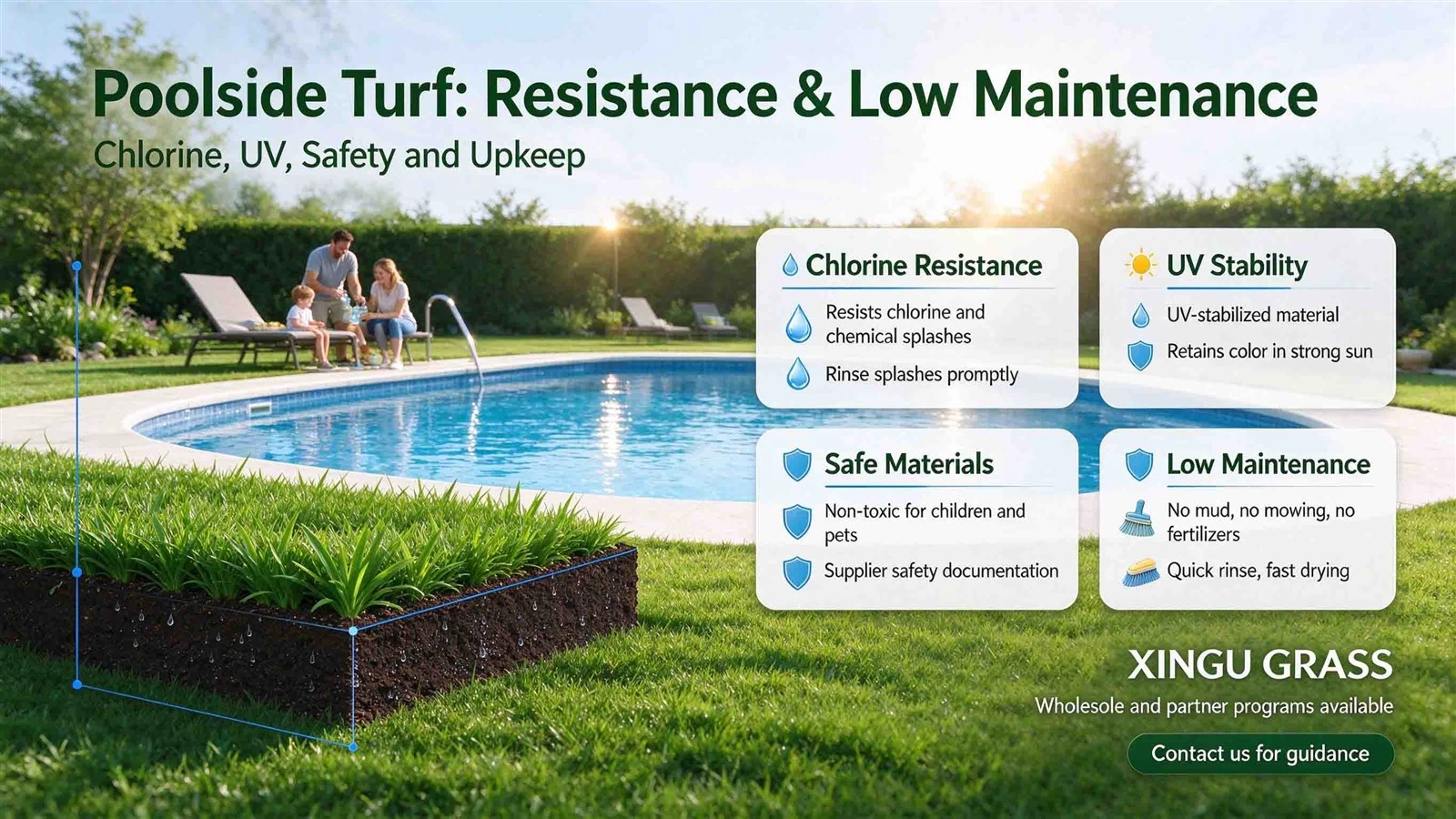
Wet concrete and pavers become slippery, creating a fall risk around pools. Artificial turf offers better traction underfoot and a softer landing than hard surfaces - a meaningful advantage for families with children and pets.
2. Drainage That Works
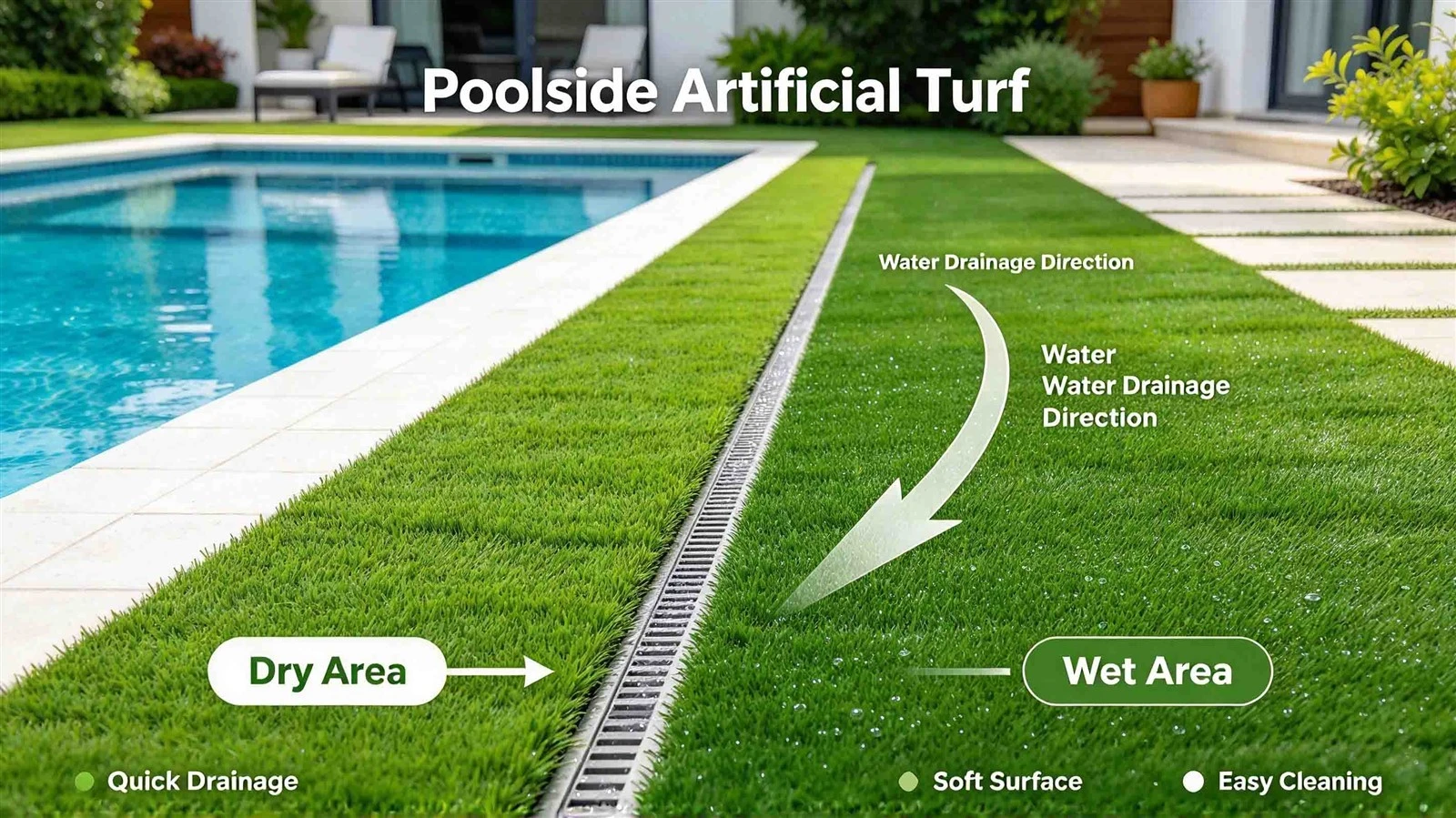
Turf for pool areas should have a permeable backing and drainage holes so water passes through quickly. Fast drainage prevents puddles, keeps the surface drier and makes cleaning easier after splashes and rain.
3. Chlorine and UV Resistance
Pool water contains chlorine, so choose turf labeled chlorine- and chemical-resistant, and rinse heavy splashes promptly. UV-stabilized materials also hold their color in the strong sun typical of poolside locations.
4. Safe Materials
Confirm that the turf and any treatments are non-toxic and safe for children and pets. Reputable suppliers can document material safety, which matters most in family and high-traffic settings.
5. Low Maintenance
Artificial turf around pools means no mud tracked indoors, no mowing and no fertilizers. A quick rinse keeps it clean, and the surface dries fast after use - practical for busy outdoor living areas.
Conclusion
Artificial turf around pools combines slip-resistant safety, fast drainage, chlorine resistance and minimal upkeep - when the right product is specified. XINGU GRASS supplies artificial turf engineered for innovation and reliability, including poolside applications. Contact us for guidance, or ask about our wholesale and partner programs.