

How Artificial Turf Is Made: From Yarn to Finished Roll
Nov 23, 2026
Introduction
Buyers often judge turf by looks alone, but quality is built inside the factory. This article explains the manufacturing process so you can ask the right questions of any artificial turf supplier.
Yarn Creation
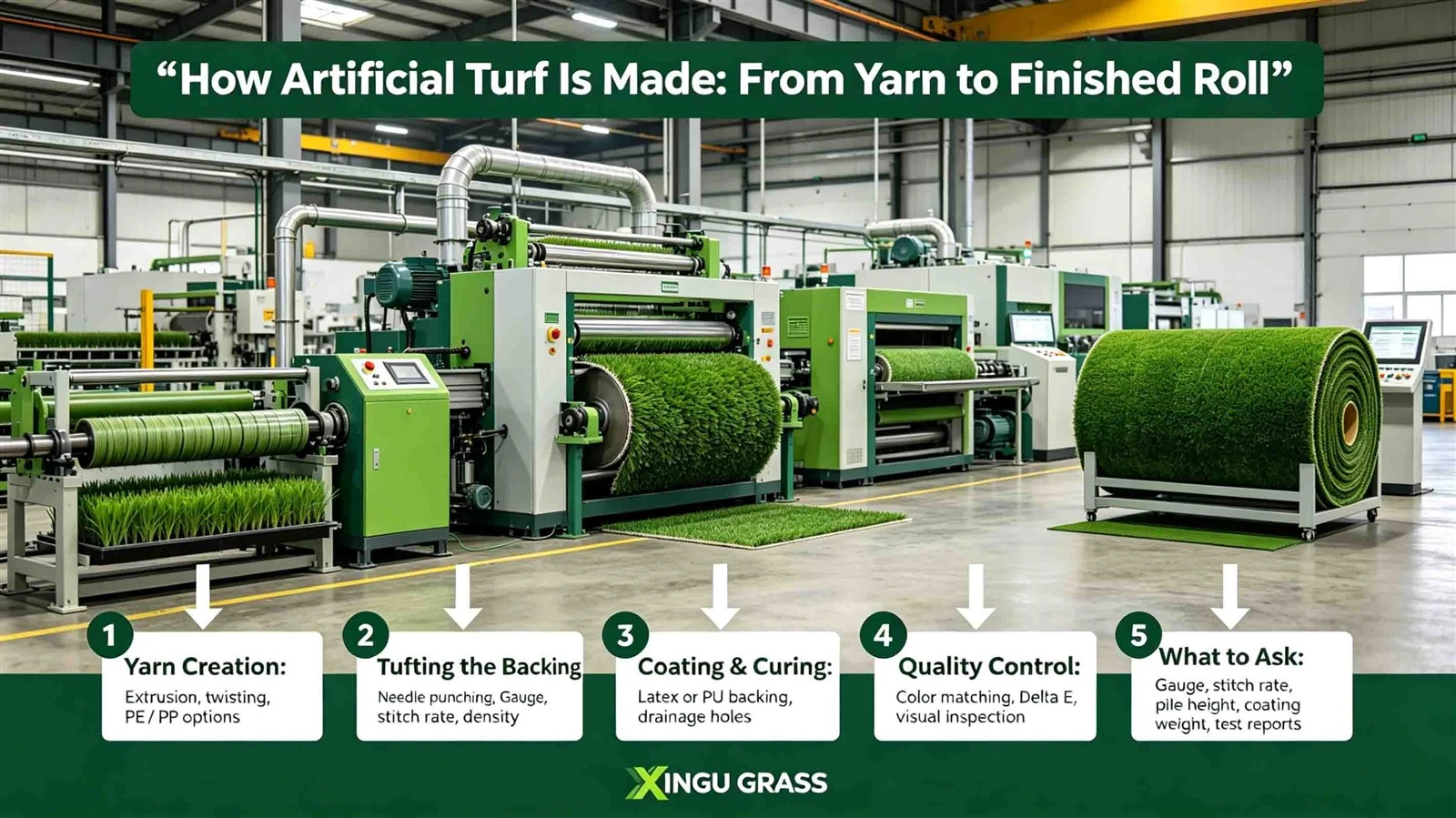
The process starts with extrusion. Polymer pellets are melted and formed into yarn filaments, then twisted for strength. Polyethylene yarns deliver softness and resilience, while polypropylene offers a lighter, more economical option.
2. Tufting the Backing
High-speed tufting machines work like giant sewing machines, stitching yarn through a woven polypropylene primary backing. Gauge and stitch rate control density - finer gauge and tighter stitches mean more tufts per square meter and a fuller surface.
3. Coating and Curing
A latex or polyurethane coating is applied to the backing with controlled weight, then cured in ovens. This locks the tufts in place, and drainage holes are added where the system requires them.
4. Quality Control
Reliable factories monitor coating weight and oven temperature continuously. Color is checked with spectrophotometers against standard swatches within a tight Delta E tolerance, and every roll passes visual inspection before wrapping.
5. What to Ask Suppliers
Before ordering, ask for tuft gauge, stitch rate, pile height, coating weight and test reports. Consistent answers indicate a factory with real process control - the foundation of a long-lasting surface.
Conclusion
Quality artificial turf is the result of controlled extrusion, tufting, coating and inspection. XINGU GRASS supplies artificial turf engineered for innovation and reliability with documented process control. Contact us for specifications, or ask about our wholesale and partner programs.