

Artificial Plants for Airports and Transit Hubs: Durable Public Greenery
Nov 19, 2026
Introduction
Airports run 24/7, and live plants bring irrigation leaks, replacement cycles and staffing cost. This article explains why artificial greenery suits terminals and how to specify it.
1. Why Live Plants Fail
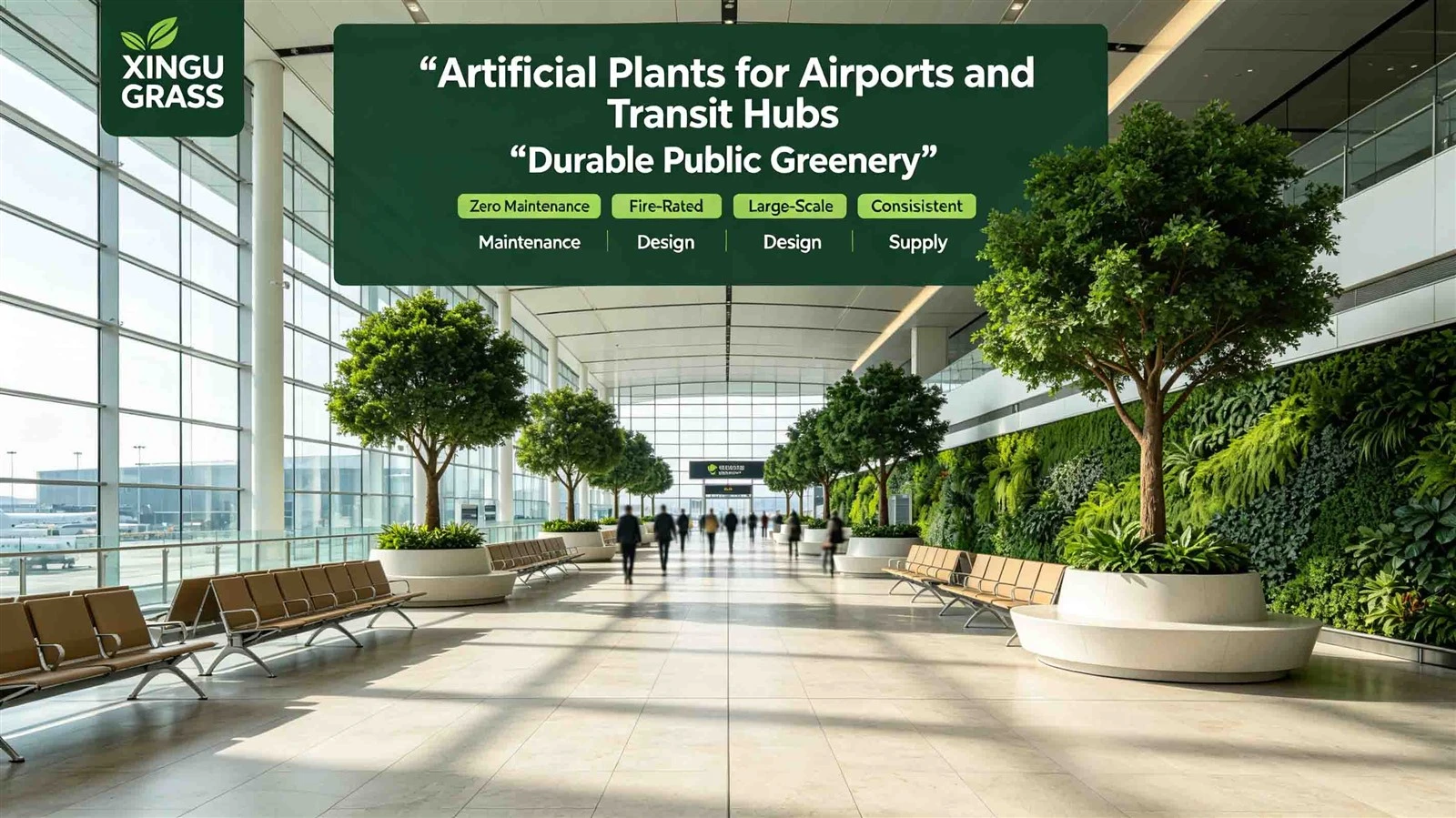
In airport environments, live plant programs carry ongoing replacement cost - typically a 30–50% markup over retail - plus irrigation, biosecurity paperwork and horticultural staff. Artificial botanicals remove every one of these burdens.
2. Zero Maintenance
Artificial trees and planters need no watering, fertilizing or pest control. After installation they require only occasional dusting, with a lifespan of decades in high-traffic terminals.
3. Fire-Rated for Public Buildings
Terminals and atriums are regulated spaces. Specify inherently flame-retardant (IFR) materials or products tested to standards such as NFPA 701, which most commercial building codes require for indoor public greenery.
4. Large-Scale Design
Artificial greenery supports big statements: walk-through tree sculptures, concourse waiting areas and atrium installations scaled to the architecture - without irrigation systems or grow lights.
5. Consistent, Repeatable Supply
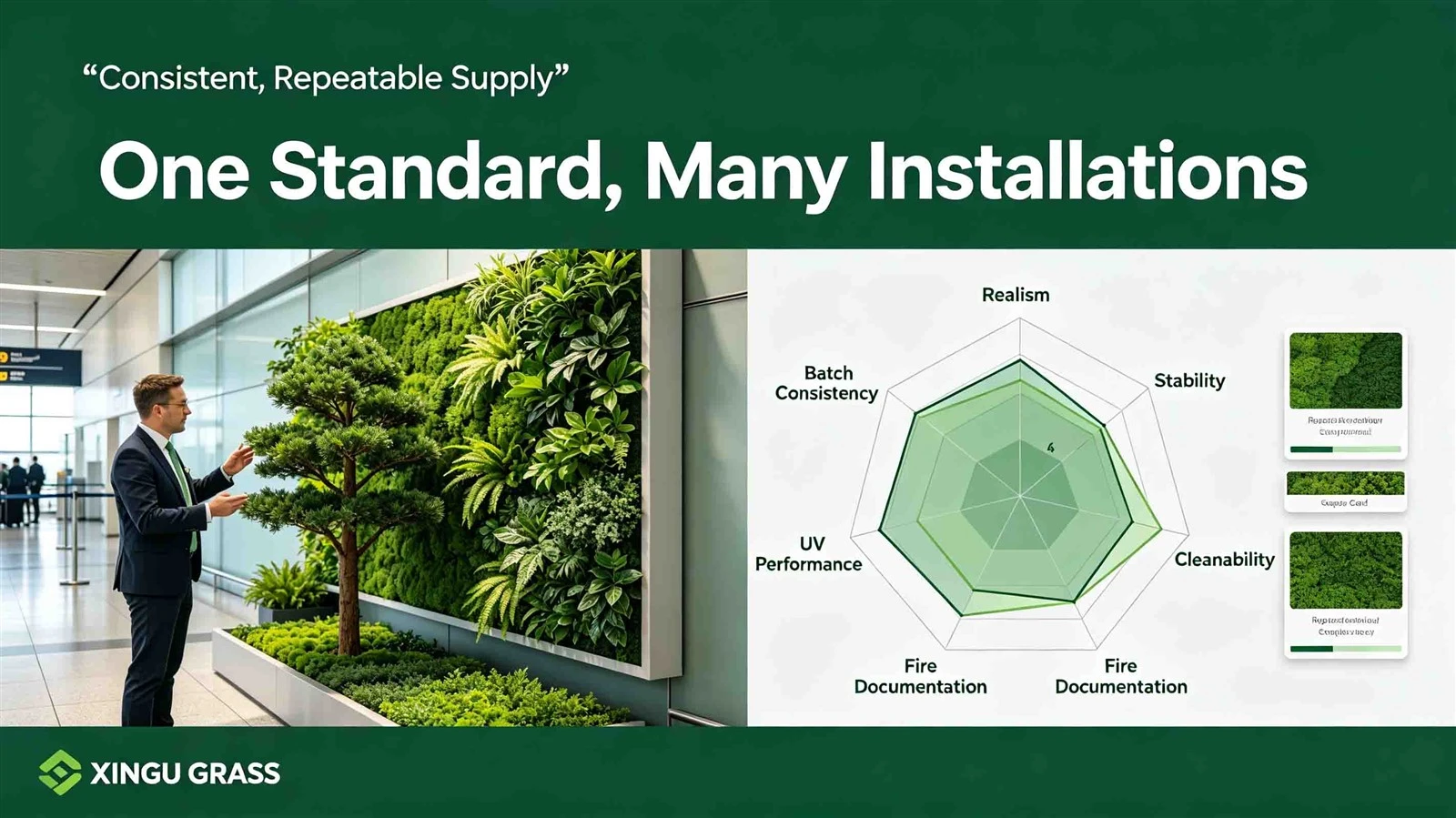
For ongoing facility programs, evaluate realism, stability, cleanability, fire documentation, UV performance and consistency across repeat orders, so future expansions match the original installation.
Conclusion
Artificial plants give airports and transit hubs durable, fire-rated greenery with zero maintenance and consistent large-scale design. XINGU GRASS provides artificial greenery suited to public and commercial spaces. Contact us for a tailored proposal, or ask about becoming a dealer.