

Artificial Turf Height: Choosing the Right Size Determines Usage Experience and Lifespan
May 20, 2026
The height of artificial turf is one of the core parameters that determine its application scenarios, sports experience, and durability, measured in millimeters (mm). Seemingly small differences in height can directly affect the practicality and adaptability of the turf. Unlike natural turf, the height of artificial turf is precisely controlled by the production process, and each height corresponds to specific usage needs. It is not that the higher the better, nor the shorter the more cost-effective. Choosing the right height can maximize the value of the turf and avoid problems such as rapid wear and poor experience in later use. Whether it is for leisure landscape paving or professional sports venue construction, clarifying the core role of turf height is the first step in purchasing.
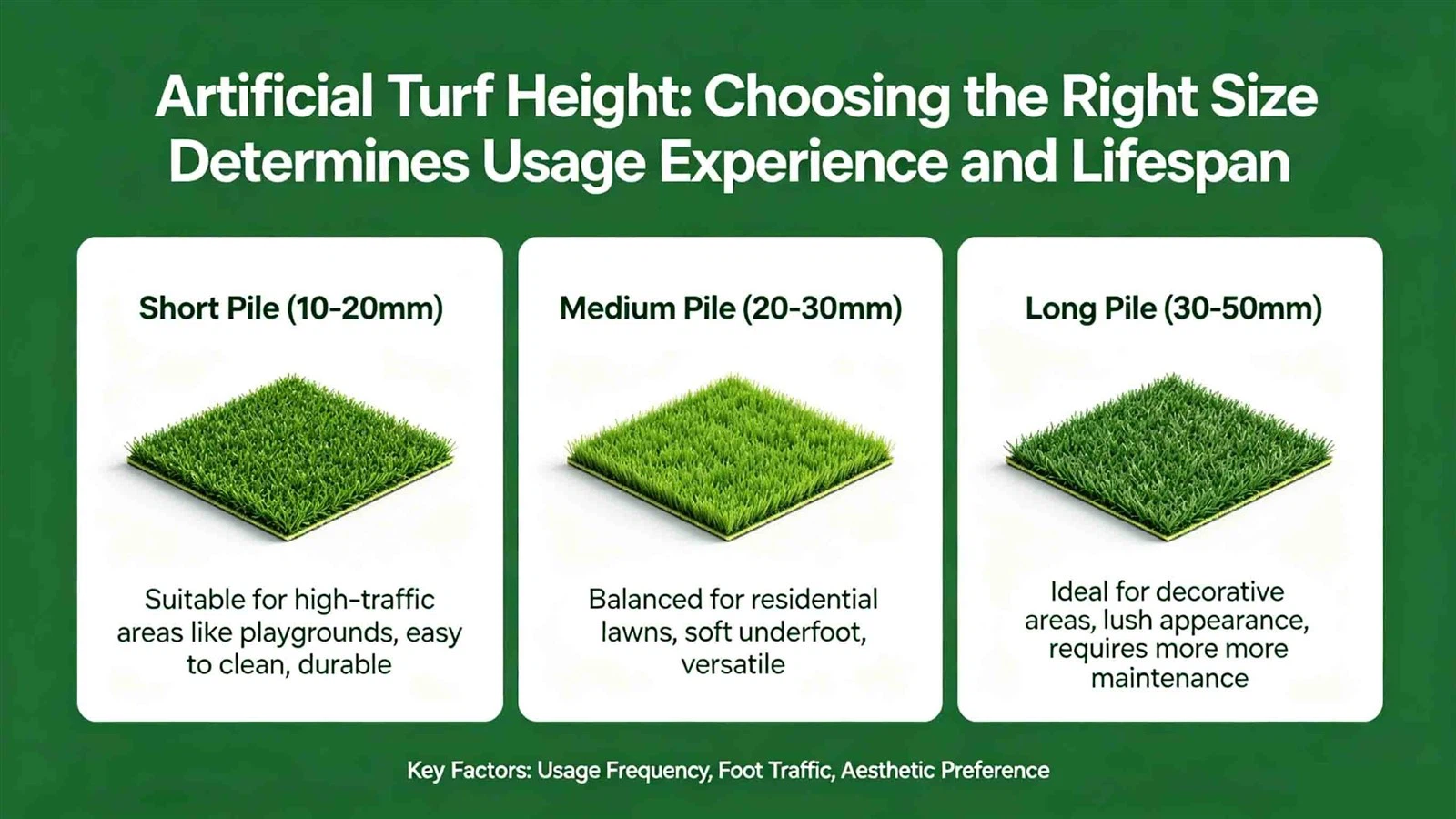
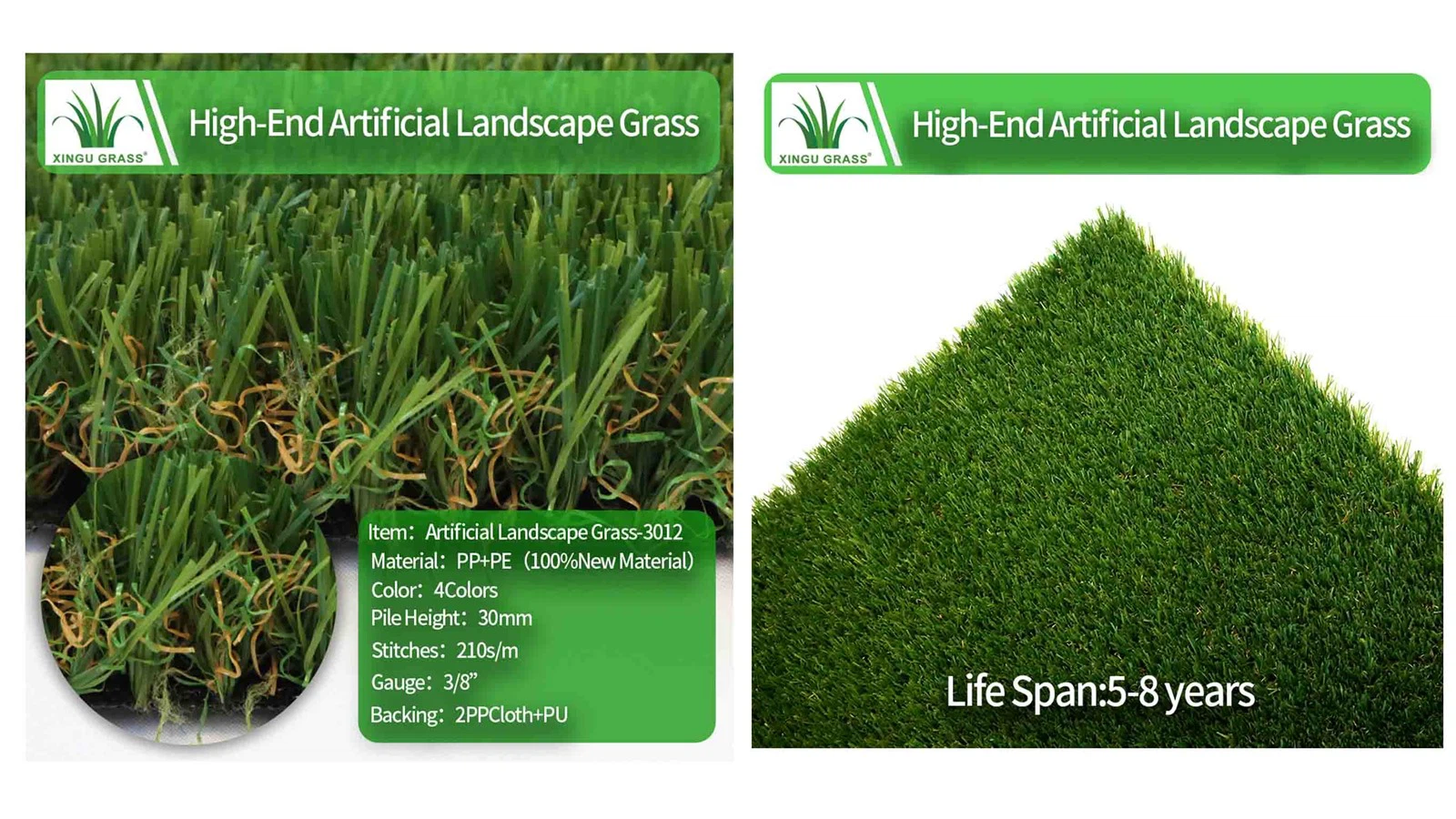
Artificial turf of different heights has a clear division of applicable scenarios, which is also a general standard in the industry, so there is no need to blindly try cross-scenario selection. Low-height turf (10-35mm) is mainly used for decorative scenarios. Among them, the 10-20mm model is suitable for roof greening, engineering enclosures, wall decoration, etc. It is characterized by high density and low cost, only for visual presentation, and not suitable for frequent stepping; the 25-35mm model is suitable for private courtyards, balconies, park landscapes and kindergarten leisure areas. It has high simulation and soft foot feel, which can meet the needs of daily walking, leisure photography, etc., but its buffering performance is limited and it cannot be adapted to formal sports scenarios. Medium and high-height turf (40-60mm) focuses on sports scenarios. The 40-45mm model is the most cost-effective general-purpose model, suitable for five-a-side football fields, campus playgrounds, etc. It balances buffering performance and ball feel, and is also a best-selling model for foreign trade container shipping; the 50-60mm model is professional-grade, used for standard 11-a-side football fields and professional competition venues. It needs to be filled with quartz sand and rubber particles, which can minimize sports injuries and ensure the stability of football rebound.
When purchasing artificial turf height, the most important thing is to avoid the misunderstandings that "the higher the more durable" and "the shorter the more cost-saving". The core is to match the usage scenario and frequency. Many people mistakenly think that turf of 35mm or less can be used for football fields, but in fact, such turf has too short grass filaments, insufficient buffering, which makes it easy for players to get injured when falling. In addition, the football bounces irregularly, which does not meet the sports standards. Long-term stepping will also cause rapid lodging and wear, which will increase the cost of later replacement. On the contrary, if high grass of more than 50mm is selected for courtyard landscape, it will not only cost more, but also be inconvenient to take care of and easy to accumulate dust due to the long grass filaments, affecting the landscape effect. The correct selection logic is: first clarify the usage scenario (decoration/leisure/sports), then determine the height according to the usage frequency (low-frequency decoration/high-frequency sports). Choose 10-35mm for decoration, 40-45mm for ordinary sports, and 50-60mm for professional sports. Only in this way can practicality, durability and cost-effectiveness be balanced.