

PE, PP Or Nylon Artificial Turf: Which Yarn Material Should You Choose?
Aug 31, 2026
Introduction
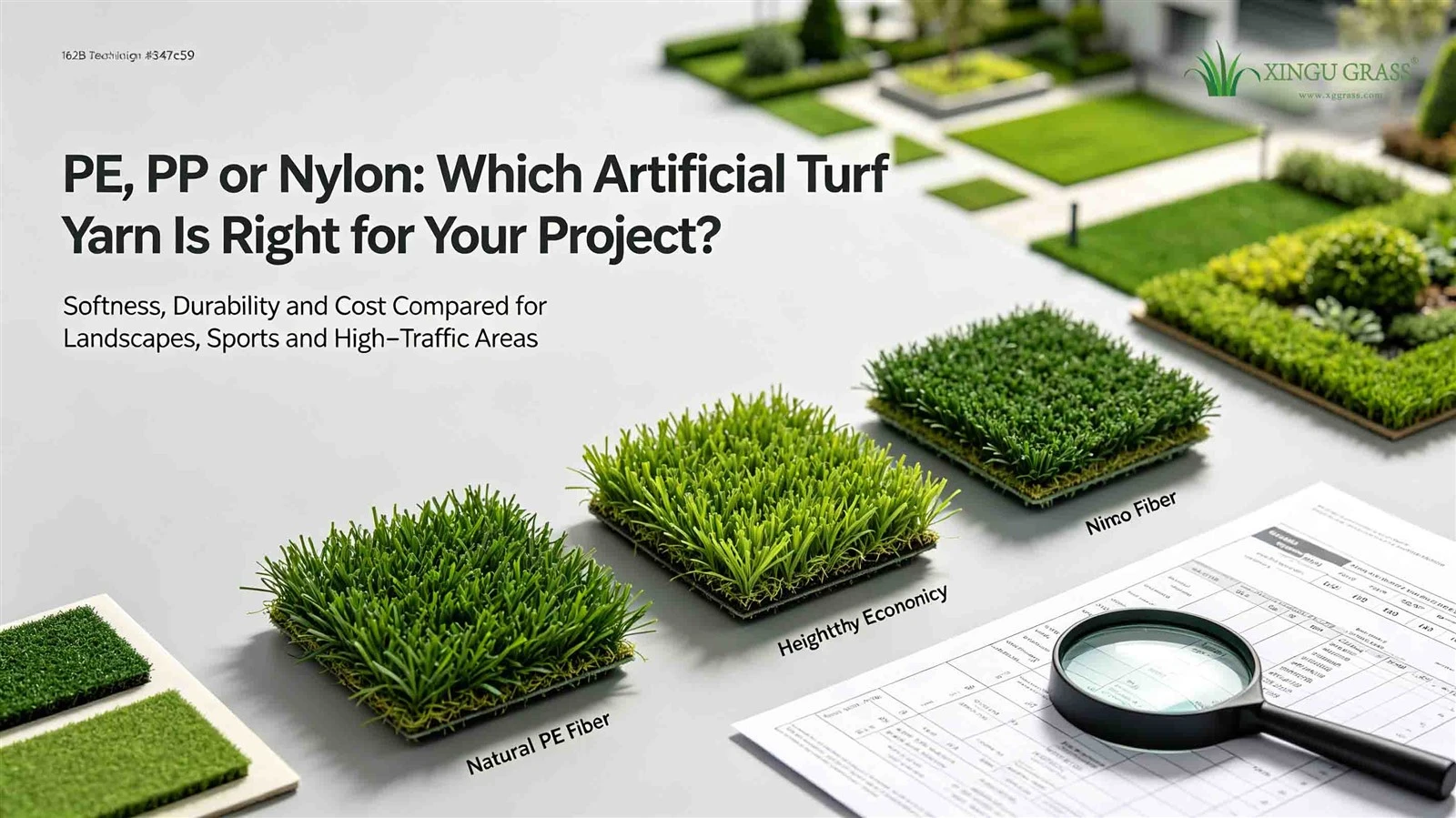
Buyers often see "PE, PP or nylon" on artificial turf data sheets without knowing what the difference means for their project. This article explains how the three yarn materials compare in softness, durability and cost, so you can specify the right turf for your application - and avoid overpaying.
1. Why the Yarn Material Matters
The yarn is the part users see and touch; it defines softness, resilience, color retention and price. Understanding the trade-offs prevents two common mistakes: choosing a cheap fiber that flattens, or paying for premium fiber you do not need.
2. PE - Soft and Natural
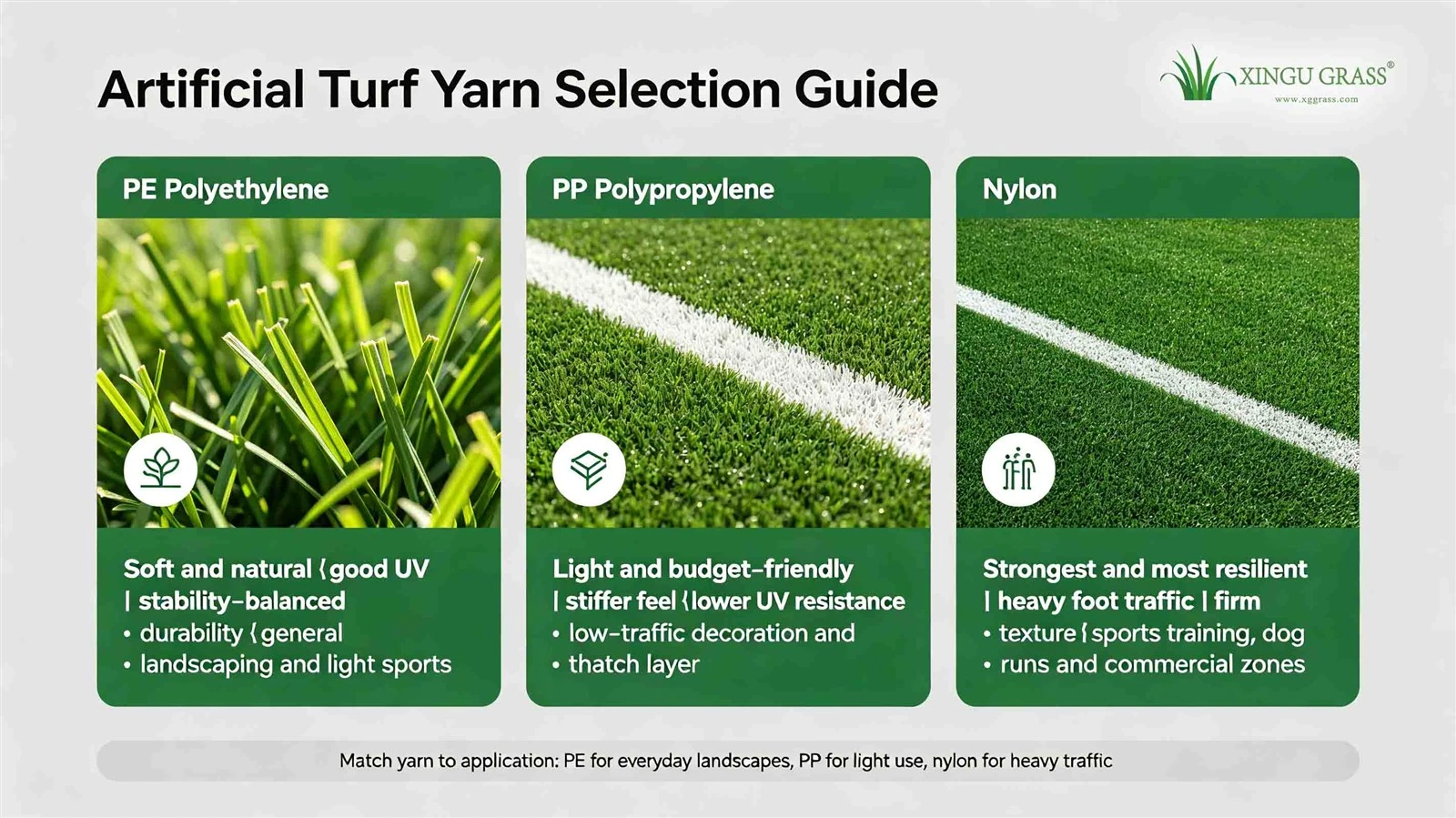
Polyethylene is the most common primary fiber for lawns, landscapes and light sports. It feels soft and natural, recovers well, and - with modern UV stabilizers - keeps its color for years outdoors.
3. PP - Light and Budget-Friendly
Polypropylene is light and inexpensive, often used as a thatch layer or for low-traffic decorative areas. It is stiffer and less UV-resistant, so it is rarely the right choice for high-use surfaces.
4. Nylon - Tough and Resilient
Nylon is the strongest and most resilient of the three, bouncing back under heavy foot traffic. It suits sports training areas, dog runs and high-traffic commercial zones, though it costs more and feels firmer.
5. How to Decide
Match the material to the application: PE for general landscaping, PP for economy or thatch, nylon for intensive use. Also check UV stabilizers, backing quality and fire-retardant treatment - not just the yarn name.
Conclusion
Choosing artificial turf yarn comes down to application, traffic and budget: soft PE for everyday landscapes, budget PP for light use, and tough nylon for heavy traffic. XINGU GRASS supplies artificial turf engineered for innovation and reliability, and can help you select the right material for your market. Contact us for specification advice, or ask about becoming a dealer.