

Artificial Greenery in Hotels and Restaurants: A Design and Cost Guide
Oct 29, 2026
Hospitality operators want the inviting look of greenery without watering, pruning or replacing wilted plants. Artificial greenery delivers a consistent look around the clock. This guide explains how hotels and restaurants use it to cut cost and elevate design.
1. Why Hospitality Chooses Artificial
Live plants need daily watering, pruning, soil care and seasonal replacement - all costly in a busy hotel or restaurant. Artificial greenery stays perfect 24/7 with no irrigation, no plant health issues and no dead leaves before a guest arrives.
2. The Cost Saving
Properties that switch to artificial installations typically cut their greenery-related maintenance budgets by 40–60%, and some report annual savings above $100,000. For large properties, the return comes quickly and compounds year after year.
3. Where It Works
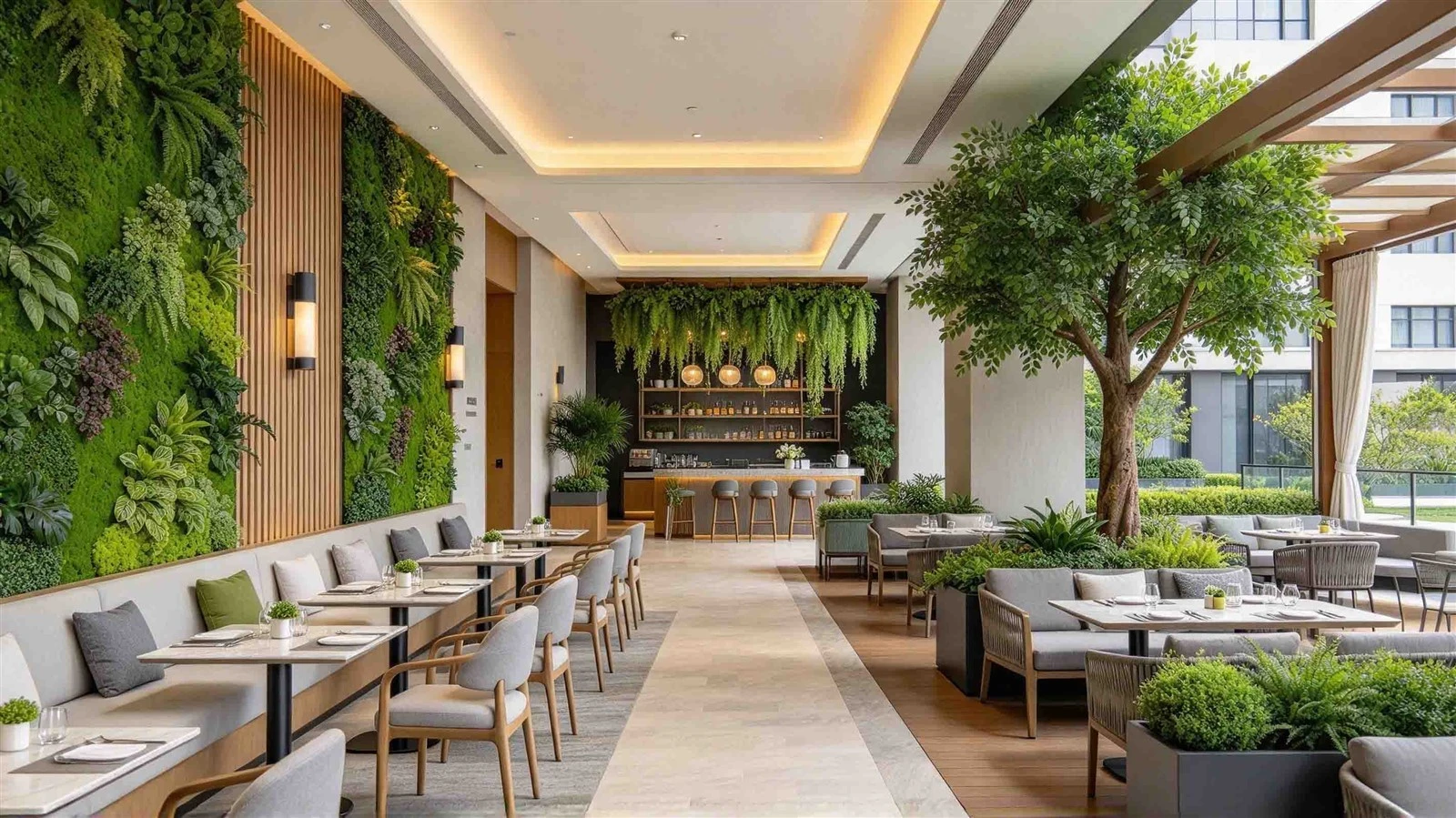
Artificial greenery fits lobbies, corridors, restaurants, guest rooms and photo backdrops. Green walls work well behind reception desks and in dining areas, where they frame seating and create memorable, photogenic moments for guests.
4. Design Freedom
Unlike live plants, artificial options do not depend on natural light or irrigation, so they can go into windowless corridors, basements and ceiling areas. Hospitality projects routinely use decorative walls above 20 square meters and artificial trees taller than 3 meters.
5. What to Specify
Choose fire-rated materials - B1-rated greenery is safer indoors - and UV-stable products for outdoor terraces. Dust-resistant surfaces keep maintenance low, and a reliable supplier should provide material documentation and warranty support.
Conclusion
Artificial greenery helps hospitality spaces look lush and consistent while cutting maintenance cost significantly. XINGU GRASS provides commercial artificial greenery and can help you select fire-rated, design-ready options. Contact us for a tailored proposal, or ask about becoming a dealer.


